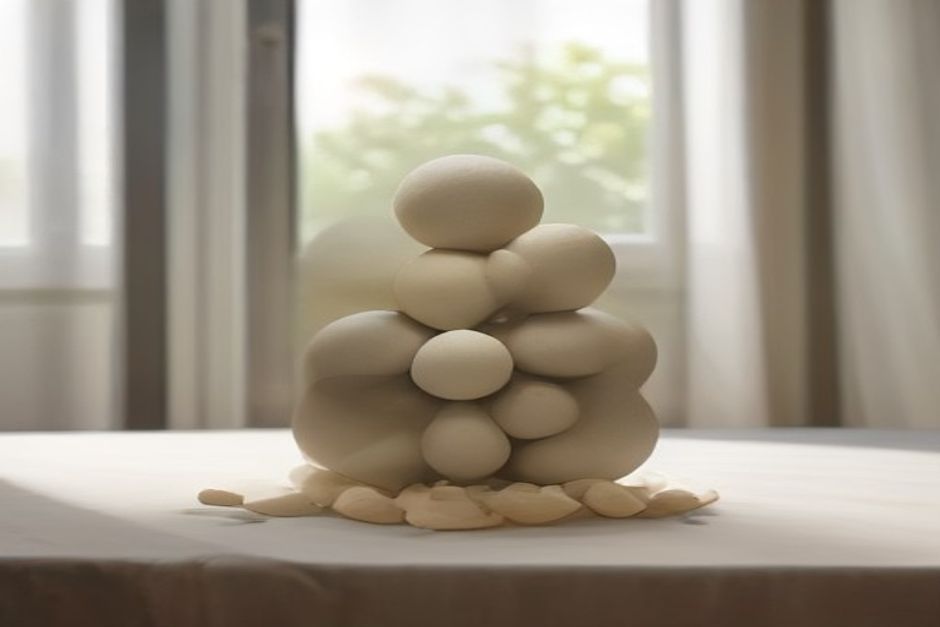
Ask "how are you?" and the honest answer is usually layered: my back is stiff, I'm breathing shallow, my brain won't stop, but underneath it all things are basically fine. Ancient yoga noticed this a long time ago and built a model for it — the pancha kosha, the five sheaths or layers of the self. It comes from the Taittiriya Upanishad, a text roughly 2,500 years old, and it remains one of the most practical maps in the whole tradition. Not because it's mystically true in some provable way, but because it gives you better questions.
The five layers, from outside in
1. Annamaya kosha — the food body
Anna means food; this is the physical body — bones, muscle, skin, the whole hardware. The Upanishad's blunt point: you are, at this layer, organized lunch. Everything you eat becomes this sheath. In practice this is the layer of asana, posture, stretching, and also of sleep and meals. When someone says "I feel stiff," annamaya is talking. Our anatomy section lives entirely on this floor.
2. Pranamaya kosha — the breath body
Beneath the hardware runs the energy layer: prana, the life force, which in practical terms tracks closely with breath. This is the sheath you meet in every pranayama practice. You know it directly: same body, same room, but five slow breaths later you're a different animal. Traditionally this layer includes the five vayus, the winds that govern different functions — digestion, circulation, expression. Modern readers can take it as: the physiological processes that run on their own but respond to how you breathe.
3. Manomaya kosha — the mind body
Manas is the processing mind: senses, reactions, the running commentary. It's the layer that notices an email, drafts three replies, and rehearses an argument from 2019 while you're trying to hold tree pose. This is where most stress lives. It isn't the enemy — without it you couldn't read this page — but when it runs the whole show, the outer layers tighten to match. Meditation is largely the art of watching this layer without obeying it.
4. Vijnanamaya kosha — the wisdom body
Deeper than the chatter is the discerning mind: vijnana, the faculty that knows the difference between a passing mood and a true signal. It's intuition, conscience, the quiet "this isn't right" that arrives before reasons. In the Upanishadic view this layer is shaped by study and reflection — the tradition of svadhyaya, self-study, lives here. You know this sheath when a decision finally clarifies, or when you watch your own manomaya spin and choose not to follow it.
5. Anandamaya kosha — the bliss body
The innermost layer: ananda, usually translated as bliss, though "contentment" is closer to the lived version. It's the ease of deep dreamless sleep, the unbothered okayness that occasionally surfaces in yoga nidra or at the end of a long savasana. Not excitement — excitement is manomaya with good news. This is quieter: the sense that, at bottom, nothing is wrong.
How to actually use the model
The koshas earn their keep as a diagnostic habit. When you feel off, run the layers:
- Body? Maybe you need movement, food, or sleep — not more thinking. A stiff day is an annamaya day; treat the layer that's complaining.
- Breath? Shallow, held, rushed? Five minutes of alternate nostril breathing addresses pranamaya directly, and the mind often follows.
- Mind? Spinning, reactive, rehearsing? That's manomaya, and it responds to being watched — ten minutes of breath counting beats ten minutes of scrolling.
- Deeper? If the body is fine, the breath is fine, the mind is quiet, and something still feels wrong — that's vijnanamaya information. Listen to it. Journal, walk, sit. Don't patch a wisdom-layer signal with a body-layer fix.
The koshas don't ask you to believe anything. They ask you to notice which floor of the building the noise is coming from.
Without dogma
You don't need to accept the metaphysics — the sheaths as literal coverings over an eternal self — to use the map. Read it functionally and it's a five-point checklist that happens to be older than most religions. It also explains a real phenomenon every practitioner eventually meets: why a purely physical practice sometimes leaves you restless (you worked annamaya while manomaya raged), and why sitting still sometimes fixes what stretching couldn't. Yoga's full toolkit — poses, breath, meditation, reflection — maps neatly onto the five layers, which is why complete practice feels different from exercise alone.
For the neighboring models, see the chakra system (the vertical-energy map) and prana (the current that runs through layer two). Same territory, different legends on the map. Use whichever helps you locate the noise.