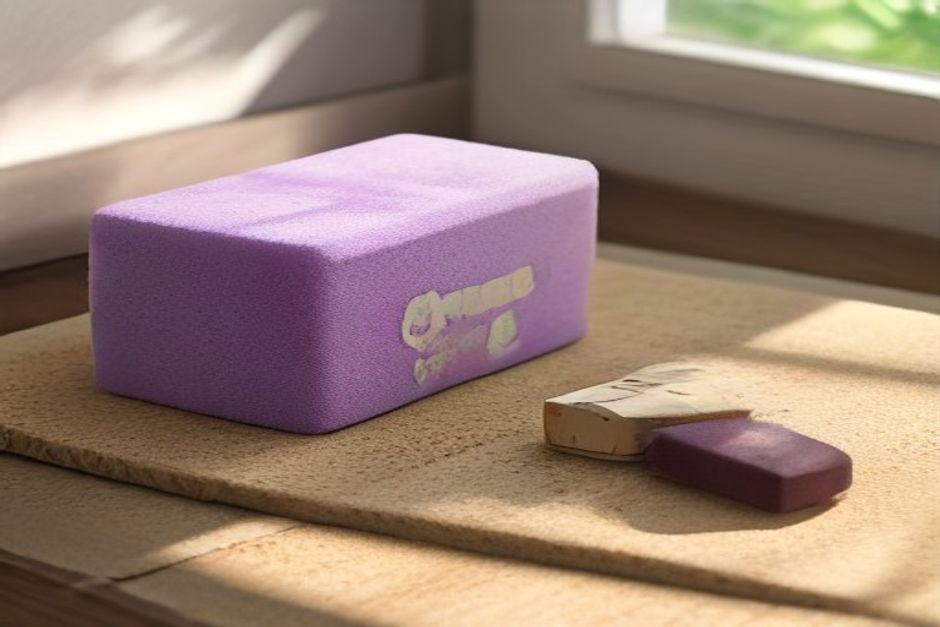
Yoga blocks look identical from across the room: same brick shape, same job description. Pick one up and the illusion ends. A foam block weighs about as much as a sandwich; a cork block weighs about as much as the sandwich, the plate, and a small apology. That single difference — weight — cascades into everything else about how the two materials behave under your body. As we said in our props guide, blocks are the highest-value purchase in yoga after the mat itself, so it is worth choosing deliberately.
The short version
- Foam: light, soft, cheap, forgiving. Best for restorative work and beginners.
- Cork: heavy, firm, stable, durable. Best for standing poses and strong, load-bearing support.
- Either: buy a matching pair. Two blocks of different materials is a small daily annoyance.
Foam: the friendly one
Foam blocks — usually EVA, sometimes high-density — are the default in most studios, and for good reason. They cost a few dollars, they travel in a bag without doubling its weight, and they are kind to bodies: sit on one, rest your forehead on one, wedge one under a knee, and it gives a little. That give is the point in restorative practice, where the block's job is to hold you comfortably for five minutes, not to survive a side plank. Foam is also the right first block for beginners, who will use it clumsily, drop it on their own feet, and benefit from a prop that forgives all of that. The downsides: foam compresses under heavy load, dents over years, and in a standing balance it can feel slightly mushy — fine for most people, noticeable if you are heavy or pressing hard.
Cork: the planted one
Cork is foam's serious older sibling. It does not compress, wobble, or care how much you weigh. Set a cork block on its lowest height, put a hand on it, and lean your full body weight in — it simply does not move. For poses where the block is load-bearing and your balance depends on it — think supported standing poses, half-moon variations, or any hand-supported balance — that planted feeling is worth real money. Cork also ages gracefully: it resists sweat, wipes clean, and a decade of use mostly makes it look better. It is the more sustainable material too, harvested from bark that regrows. The costs are literal and physical: cork runs two to four times the price of foam, it is heavy to carry, and it is hard. Rest a forehead on cork in a restorative pose and you will understand the entire foam market in one breath.
Sweat, grip, and the studio bag test
Two details decide the matter for many people. First, sweat: dry, both materials grip fine; sweaty, cork actually improves slightly, while smooth foam can get slick — relevant if you run warm or practice vigorous styles. Second, transport: if the block lives at home, weight is irrelevant; if it commutes in a bag with a mat and a water bottle, foam wins by a mile. Some home practitioners split the difference — cork stays by the mat, a cheap foam lives at the office or in the suitcase. Our travel practice notes take the same view: the best prop is the one that is actually there.
What about wood and bamboo?
Wooden blocks — pine, bamboo — exist and are beautiful, heavy, expensive, and unforgiving. They are the traditional choice in some Iyengar studios, and they are legitimately excellent under load. But they are slippery with sweat, brutal on floors and foreheads, and hard to recommend as a first or second block. Admire them; buy cork.
The verdict
Match the block to the practice, not the aesthetic. Mostly restorative, yin, gentle, or brand-new? Foam, and spend the savings on a good mat — our mat guide will help. Mostly standing poses, strong vinyasa, or a heavier frame? Cork, bought once and kept for a decade. Deeply unsure? Buy one of each — total cost under thirty dollars — and let a month of practice vote. The block you keep reaching for has answered the question better than any article can, this one included.