You are holding downward-facing dog, breathing away, and then a small fist clenches itself in the middle of your calf. Or it happens in tree pose, or at three in the morning after an evening class. Calf cramps are one of the most common complaints in yoga rooms — common enough that teachers barely look up anymore — and also one of the least well explained. Here is the honest version: what is actually happening, what hydration has to do with it (less than you have been told), and what to do when one arrives mid-pose.
Why the calf, and why now
Your calf is mainly two muscles — the gastrocnemius on top and the soleus underneath — joining into the Achilles tendon. In yoga they get a raw deal from both directions. In downward dog and forward folds they are stretched long; in balances and any pose with pointed toes they are shortened hard. Cramps cluster at the extremes.
The classic yoga cramp trigger is pointing the toes. Pointing shortens the calf to its minimum length, and muscles held short under load are the most cramp-prone configuration there is — which is why cramps strike in floor poses with pointed feet, in balances where the toes grip, and in bed at night, when sleeping feet naturally point. If your calves cramp in class, notice where your toes were a second before. They were probably pointing.
The other honest factors: fatigue (a new practice, a longer class, more standing poses than your calves are trained for), cold muscles (cramping is rarer once tissue is warm), and plain deconditioning — calves that spend all week in shoes and chairs are surprised by what bare feet on a mat demand. Tight calves make all of this worse; if yours are chronically stiff, the mobility work in our tight calves guide addresses the underlying length problem directly.
The hydration question, honestly
Every cramp article on the internet reaches for the same prescription: drink more water, eat a banana, check your electrolytes. Here is the less satisfying truth from the research: the evidence linking ordinary exercise cramps to dehydration or electrolyte loss is surprisingly weak. People cramp fully hydrated; people drenched in sweat do not. The stronger current explanation is neurological — a fatigued muscle's reflexes misfire, and the 'relax' signal loses an argument with the 'contract' signal.
This does not mean hydration is irrelevant — being genuinely dehydrated makes everything worse, and heavy sweaters in hot classes should absolutely replace fluids and salt. It means water is not a magic fix, and neither is potassium. The boring fundamentals — warming up, not pointing toes under load, building calf endurance gradually — do more than any supplement. If you sweat heavily in practice, our nutrition pages cover sensible pre- and post-practice eating without the mythology.
What to do when one hits mid-pose
First: come out of the pose. A cramp is not a stretch to breathe through; it is an involuntary contraction, and it wins arguments. Sit or lie down. Then:
- Pull the toes toward your shin. Dorsiflexing the foot — toes up, heel away — gently lengthens the cramping muscle and usually breaks the spasm within seconds. Do it slowly; yanking invites a second cramp.
- Keep the knee soft, not locked. A slightly bent knee takes tension off the gastrocnemius so the soleus can release too.
- Walk it off if you can. Once the worst passes, a minute of gentle walking with full heel contact restores normal signaling better than sitting still.
- Skip the aggressive stretching afterward. The calf will feel tender and guarded. Easy range-of-motion circles beat a deep stretch for the rest of the session.
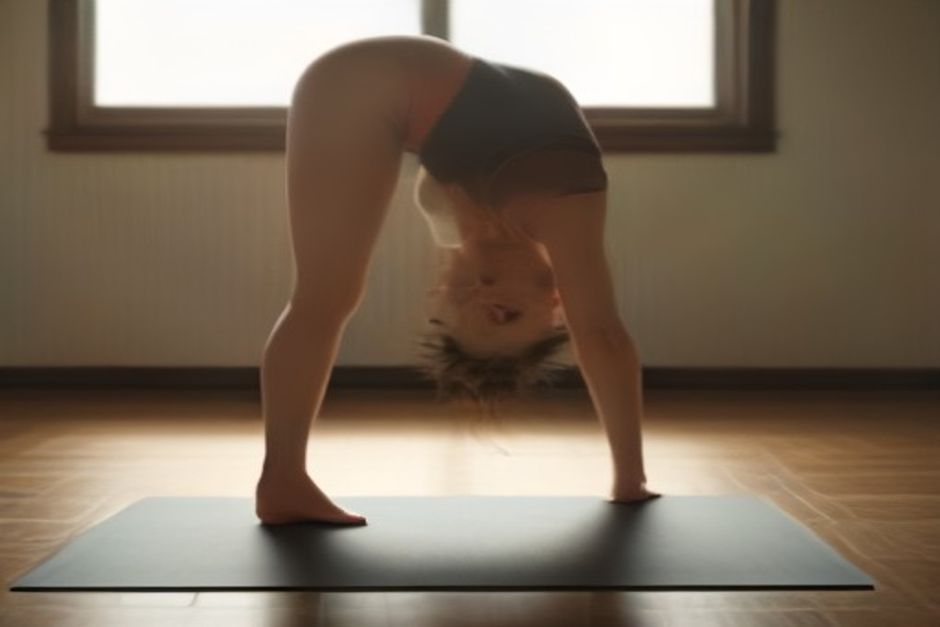
In downward dog specifically, the prevention is simple: peddle the feet before settling, and do not chase the heels to the floor. Heels hovering an inch high is a fine down dog; heels cranked down on cold calves is a cramp looking for a place to happen. Our down dog page covers the calf-friendly setup in detail.
Prevention that actually works
- Warm the calves first. A minute of heel lifts and ankle circles before class costs nothing and removes the cold-muscle risk factor entirely.
- Stop pointing your toes under load. In floor poses, let feet be neutral or lightly flexed. This single habit eliminates most yoga cramps.
- Build up gradually. New to practice, or back after a break? Two shorter sessions a week beat one heroic one, for calves as for everything else.
- Strengthen, not just stretch. Slow heel raises off a step — up for two counts, down for three — build the endurance that makes cramping rarer. Flexible but weak calves cramp; strong and mobile ones rarely do. The mechanics live in our foot and ankle anatomy page.
When to talk to a doctor: occasional cramps in practice are normal. Cramps that are frequent, severe, happen nightly at rest, or arrive alongside new medication (diuretics and statins are common culprits) deserve a medical conversation — so does any cramp with swelling, redness, or lasting pain, which can signal something other than a cramp. Yoga teachers are not a substitute for that appointment.
The good news: calves adapt quickly. A few weeks of warm starts, neutral feet, and honest heel lifts, and the three a.m. wake-ups usually stop. The muscle was never angry with you. It was just undertrained and overpointed — both fixable.