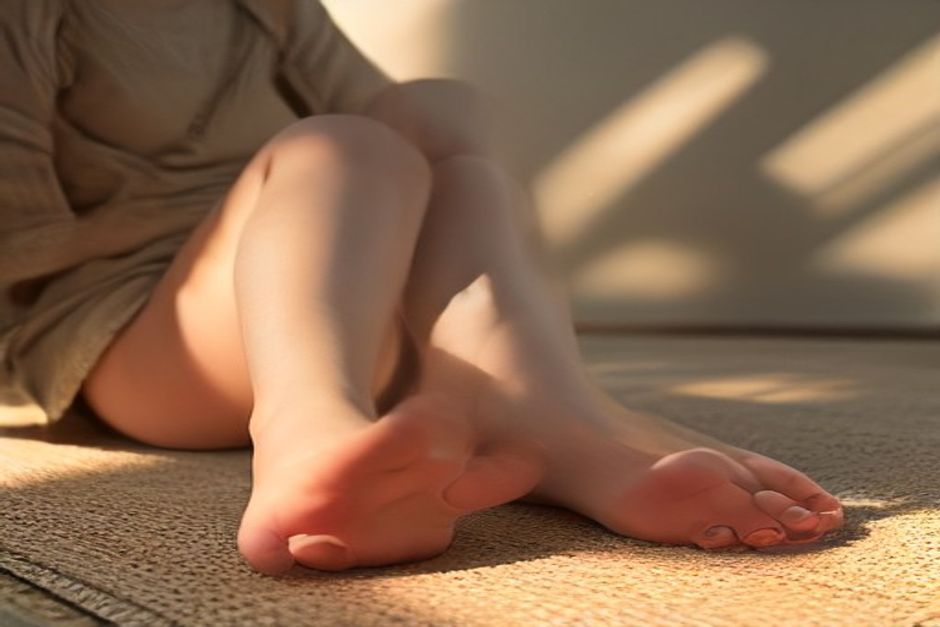
Each foot contains 26 bones, 33 joints, and over a hundred muscles, tendons, and ligaments — roughly a quarter of all the bones in your body, packed into the two structures you think about least. Then you stand on them for an entire yoga class and wonder why balance poses feel wobbly. The foot is the foundation of every standing pose you will ever do, and like most foundations, it is invisible until something goes wrong. This page is a plain tour: what is actually down there, what the alignment cues mean, and how to give your feet the ten minutes of attention a week they have earned.
The architecture, briefly
The arches — plural. People talk about "the arch" as if there were one. There are three: the medial arch (the tall, obvious one on the inside), the lateral arch (lower, along the outside), and the transverse arch (running across the ball of the foot). Together they form a dome — and a dome is one of the strongest shapes in engineering, which is why your foot can spring-load your entire body weight thousands of times a day. Fallen arches, or flat feet, mean the dome is partially collapsed; the foot still works, but it recruits help from the ankles and knees, which is where the knee story often begins.
The toes are not decoration. Your toes — especially the big toe — are steering and balance instruments. The big toe alone provides much of your push-off power when walking, and it anchors the medial arch like a keystone. Decades in narrow shoes leave most adults with toes that have forgotten how to spread and grip. In yoga this shows up instantly: try Tree Pose with toes curled and cramped, then with toes spread wide. It is nearly two different poses.
The plantar fascia. A thick band of connective tissue running from heel to toes along the sole, part spring, part tension cable for the arch. When people say "plantar fasciitis," this is the unhappy tissue. It responds well to gradual loading and gentle stretching, and poorly to sudden barefoot enthusiasm after years in cushioned shoes — a warning relevant to anyone who discovers minimalist footwear and immediately overdoes it.
The cue that matters: the tripod
Every good teacher eventually says some version of "ground through all four corners of the feet." The more precise version is the tripod: three points — the base of the big toe, the base of the little toe, and the center of the heel. Press those three points down evenly, and the arches lift on their own. This one cue fixes more standing-pose problems than any other instruction in yoga:
- Weight drifting to the outer edges (supination) usually means the inner foot is asleep — press the big-toe mound down and watch the ankle and knee re-stack.
- Collapsing inward (overpronation) means the arch has dropped — lift the inner arch without lifting the big toe, a small muscular action you can feel within a week of practice.
- Gripping toes — the "eagle claw" many people do in balance poses — is a sign the intrinsic foot muscles are doing the job the tripod should. Spread, don't claw.
Try it now in Mountain Pose: stand, find the three points, and notice how the muscles of the lower leg switch on by themselves. That sensation — foot alive, leg organized, nothing forced — is what "grounding" actually means physically.
What feet tell the rest of the body
The foot is the first link in every standing chain, and chains amplify errors upward. A collapsed arch rotates the shin inward; the inward shin torques the knee; the knee pulls the thigh; the thigh tips the pelvis; the pelvis recruits the low back. This is why a foot problem can present as hip or back discomfort, and why teachers obsess over foot placement in Warrior I — the back foot angle there is not aesthetic pedantry, it is the difference between a hip that opens and a knee that twists.
The feet are also your primary balance sensors. The soles are dense with nerve endings reporting pressure, texture, and sway to the brain; this is why balance is dramatically harder with eyes closed — you have removed vision and demoted the feet to sole informant. Training barefoot on a mat is, among other things, sensory re-education for a system that shoes have been muting for decades.
A five-minute foot practice
- Toe spreads. Standing or seated, lift all ten toes, spread them wide, lower them one at a time if you can (you mostly cannot, at first — that is the point). Thirty seconds per foot.
- Big-toe presses. Keep all toes down, then press just the big toe firmly into the floor while lifting the other four. Then reverse. This isolates the muscles that hold the medial arch.
- Tennis ball roll. Stand with a ball under one foot and roll slowly from heel to toe, pausing on tender spots, for one minute per side. Tender, not painful — you are informing the tissue, not punishing it.
- Short-foot hold. Without curling the toes, gently draw the ball of the foot toward the heel, lifting the arch, and hold five seconds. Ten reps. This is the single best exercise for arch support, and nearly invisible — perfect for queues and elevators.
- One-leg stands. Barefoot, tripod set, thirty seconds per side, eyes open then drifting toward closed. This is balance training and foot strengthening in one unglamorous package.
Shoes, honestly
You do not need to throw away your shoes. The evidence on footwear is genuinely mixed, and feet that have spent forty years in support need transition time, not ideology. The sane middle path: go barefoot at home, do your yoga barefoot (the mat is the one place shoes make no sense anyway), and let your feet spend some daily time doing their own work. If you have diabetes, neuropathy, or significant foot conditions, barefoot anything is a conversation for a professional first.
When to see someone: persistent heel pain in the morning, numbness or tingling in the feet, pain that changes how you walk, or any foot shape change that arrives quickly — these are worth a podiatrist or physiotherapist, not another stretch. Yoga is maintenance, not a substitute for assessment.
The feet are the honest employees of the body: they rarely complain until the problem is large, and they respond quickly to any genuine attention. Give them five minutes a week and the standing poses start taking care of themselves — from the ground up, which was always the only direction that worked.