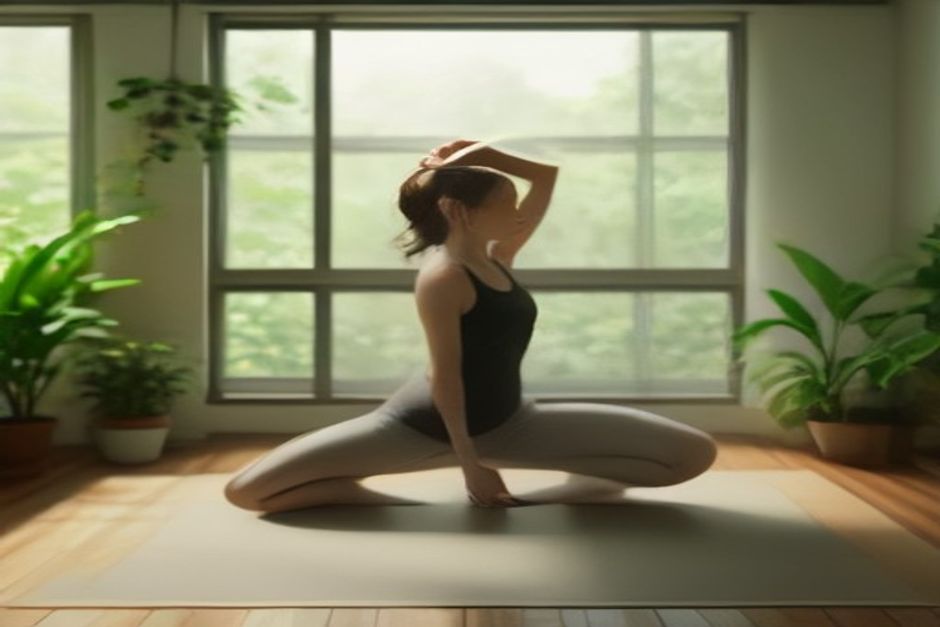
"Squeeze your glutes" might be the most-issued and least-explained cue in yoga. Sometimes it's exactly right. Sometimes it creates the problem it claims to fix. The confusion comes from treating the glutes as one muscle with one switch. They are three muscles with three different jobs, and knowing which job a pose is asking for changes how you practice it.
Meet the team
Gluteus maximus is the large one — the biggest single muscle in the body — running from the pelvis and sacrum to the back of the thigh and the iliotibial band. Its main job is hip extension: driving the thigh backward, powering you up stairs, out of a chair, and into a backbend. It also rotates the thigh outward. This is the muscle "squeeze your glutes" is aimed at.
Gluteus medius sits on the outer hip, partly under the maximus. Its job is stabilization: keeping the pelvis level when you stand on one leg. Every time you walk, one side of your pelvis would sag toward the swinging leg if the medius on the standing side didn't hold it up. In yoga, this is the quiet hero of every single-leg pose.
Gluteus minimus lies underneath the medius and assists it — same stabilizing job, smaller staff. You can't train it separately and don't need to; work the medius and the minimus comes along.
What each job looks like on the mat
Extension (maximus) in backbends. In bridge pose, the gluteus maximus is the engine that lifts the hips. Here "engage the glutes" is a fair cue — with a caveat. Clench at maximum and the outward-rotation job tags along, splaying the knees and compressing the low back. The refined version: press down through the feet, let the hips rise, and engage the glutes at maybe sixty percent — enough to lift, not so much that the knees drift apart. Same logic applies in locust and wheel.
Stabilization (medius) in standing poses. In warrior III, the lifted leg gets all the attention, but the pose is won or lost at the standing hip: the medius holds the pelvis from tipping toward the lifted side. If your standing-hip outer side burns in single-leg poses, congratulations — you have found your gluteus medius, likely for the first time. Tree, half moon, and eagle all bill the same account.
The unexpected job: letting go. Here's the part the cue misses entirely. Deep forward folds and many hip openers require the glutes to lengthen, not contract. Gripping your seat in pigeon or a seated fold works directly against the pose. The skill is selective: stabilizers on, prime movers quiet. That selectivity is more advanced than any squeeze.
Why glutes go quiet
The usual story is sitting. Hours of hip flexion keep the glutes stretched and inactive while the hip flexors shorten — a pairing sometimes called "glute amnesia," though the muscles aren't forgotten so much as out-practiced. Two consequences matter for yoga:
- The hamstrings moonlight. When the maximus under-contributes to hip extension, the hamstrings take over — one reason hamstrings feel chronically tight and get over-stretched in compensation.
- The low back fills the gap. Backbends done without glute contribution borrow extension from the lumbar spine. That pinchy feeling at the base of the back in bridge or wheel is often absent glutes, not a bad back.
Waking them up: a short honest protocol
You don't need a gym; you need accurate reps, two or three times a week:
- Bridge with awareness. Ten slow lifts. Feet parallel, knees tracking over toes, ribs soft. Feel the lift come from the seat, not the low back. If the hamstrings cramp, walk the feet slightly farther away and press through the heels.
- Side-lying leg lifts or side-lying abductions. Slow, small, and humbling — this is medius work. Fifteen per side. The burn on the outer hip means you're in the right place.
- Single-leg balance with a level pelvis. Tree, warrior III at the wall, or just standing on one leg by the counter. Watch in a mirror: if one hip hikes or drops, that's the medius asking for more practice, not more force.
- Locust, done honestly. Legs lifting from the glutes rather than yanked from the low back — lower and slower beats higher and crankier.
The refined cue
Replace "squeeze your glutes" with a question: which glute job does this pose want? Backbend — a moderate sixty-percent engagement from the maximus, knees steady. Single-leg balance — outer hip of the standing leg quietly on. Deep fold — seat deliberately soft. That one substitution turns a blunt cue into actual skill, and it's the difference between using yoga to wake the glutes up and using it to keep them clenched.
Strong glutes are not the ones you can clench the hardest. They are the ones that do their job at the right volume, then let go.