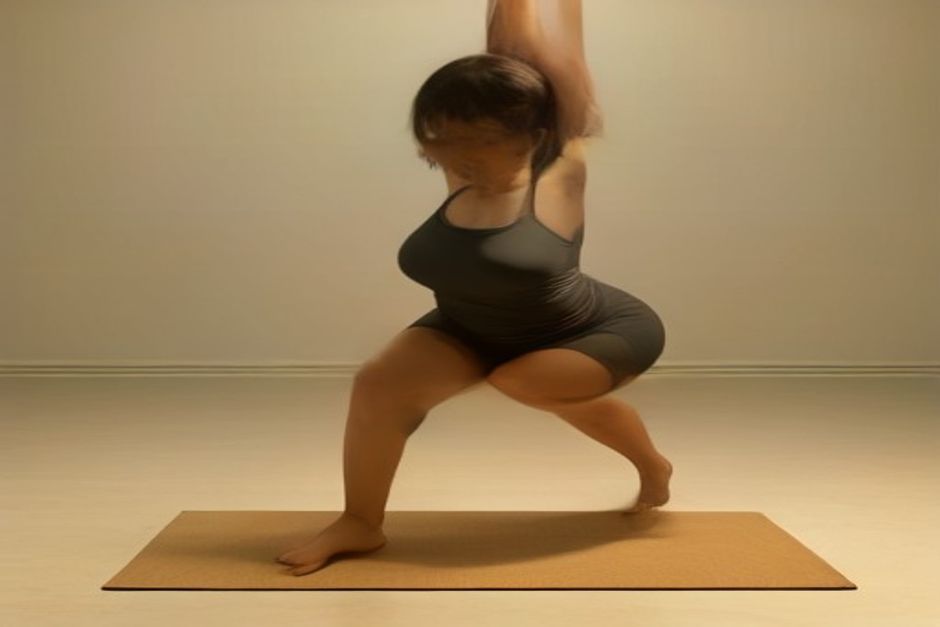
"Open hips" might be the most repeated phrase in yoga and the least examined. It gets used as if the hip were a jar with a lid — twist hard enough and it opens. The reality is more interesting and more useful: the hip is a ball-and-socket joint that moves in six distinct directions, most people are stiff in one or two of them and loose in others, and no single pose addresses them all. A little anatomy turns hip-opening from a vague ambition into an actual plan.
The joint, briefly
The hip is where the rounded head of the femur (thigh bone) meets the cup-shaped socket (acetabulum) of the pelvis. It's deeper and more stable than the shoulder — the price of bearing your weight all day — but still remarkably mobile. Around it sits a crowd of muscles doing different jobs: the hip flexors at the front (including the much-blamed psoas, which runs from the lumbar spine through the pelvis to the femur), the gluteal family at the back, the adductors on the inner thigh, the abductors on the outer hip, and the deep rotators — including piriformis — underneath.
One structural point that matters: the shape of your socket and the angle of your femur neck are set at birth and vary between people. Some skeletons will never sit in full lotus no matter how many years they practice, and some drop into it in a month. Bone is the hard limit; muscle is the negotiable part. Comparing your hip range to anyone else's is comparing skeletons.
The six directions of "open"
Every hip movement is one of these, or a combination:
1. Flexion — thigh toward chest
Forward folds, child's pose, knee-to-chest. Usually the easiest direction, partly because sitting practices it all day. Tight hamstrings limit how it feels, but the joint itself is rarely the restriction.
2. Extension — thigh behind you
Lunges, backbends, the back leg of warrior I. This is the modern body's weak spot: hours of sitting hold the hip flexors short, and extension asks them to lengthen. The low lunge with a tucked pelvis is the honest test — if you feel a strong pull at the front of the hip within seconds, your flexors are doing what sitting taught them.
3. External rotation — knee turns out
Pigeon, butterfly, tree pose, lotus. This is what most people mean by "hip opening," and it's governed by the deep rotators and the shape of your socket. Pigeon is the famous stretch, but butterfly and reclined figure-four teach the same range with less knee risk.
4. Internal rotation — knee turns in
The neglected twin. Few yoga poses train it directly (hero pose and some variations of cow-face come closest), and many flexible-in-pigeon people are stiff here. Worth attention because balanced rotation, not maximum outward rotation, is what a healthy hip looks like.
5. Abduction — leg out to the side
Warrior II's front hip, wide-legged poses, side leg lifts. Limited by the adductors and trained by every wide stance.
6. Adduction — leg across the midline
Eagle legs, the crossed-leg half of cow-face, supine twists with the leg dropped over. The outer hip and IT-band region resist here, and this direction is why eagle feels so different from pigeon.
Why variety beats intensity
If your hips feel "tight," the useful question is tight in which direction? Five minutes of pigeon trains one direction of one hip while the other five directions wait. A better session samples the range: a lunge (extension), a fold (flexion), a figure-four (external rotation), an eagle variation (adduction), a wide stance (abduction). Twenty minutes covering the map does more than twenty minutes grinding one spot — and it's how the poses in our asana library combine naturally anyway.
The psoas deserves its own paragraph
The psoas is yoga's favorite muscle to blame — for back pain, for stress, for practically everything. Calmly: it's a deep hip flexor connecting your lumbar spine to your thigh, it's genuinely shortened by sitting, and genuinely lengthened by lunges and backbends. It is not storing your trauma, and no pose will "release" it in an emotional sense. Stretch it, strengthen it, and let it be a muscle.
Strength matters as much as stretch, by the way — glutes that can actually hold a bridge or a single-leg balance protect the hip far better than passive range alone. For more on the neighborhood, see hamstring anatomy and the anatomy section.
Your hips are not a jar to unscrew. They're a compass — and most people only ever travel one point of it.