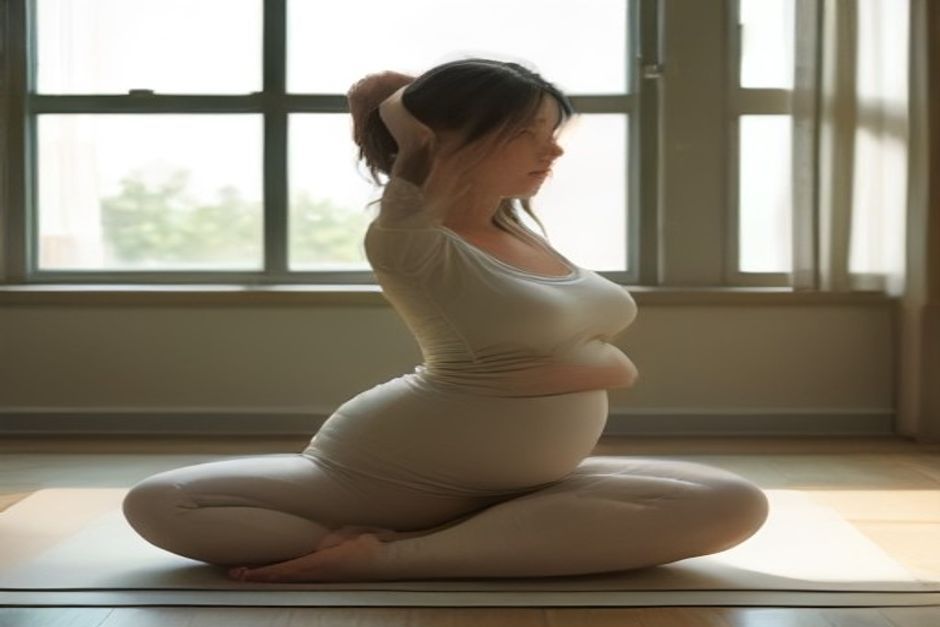
Pregnancy reorganizes a body on a schedule that no training plan could survive: a shifting center of gravity, loosening ligaments, a diaphragm with less room every month, and a nervous system processing all of it at once. Yoga, adjusted properly, maps remarkably well onto these changes — breathwork for the anxious weeks, hip work for the tight ones, and a practice of listening to the body at exactly the time listening matters most. But the adjustments are real, and this article comes with one rule printed above all others: your midwife or doctor's guidance outranks anything here or anywhere else. Get their clearance first. Then read on.
What changes in the body (the short, useful version)
Three physiological facts drive nearly every prenatal modification:
- Relaxin. The hormone that loosens pelvic ligaments for birth doesn't only target the pelvis — joints everywhere get laxer. This means flexibility increases but stability decreases. The trap: overstretching feels easy now and presents the bill later. Stay well inside your range.
- Center of gravity. It moves forward and up as the belly grows. Balance poses need a wall nearby from the second trimester on, full stop.
- Blood flow and pressure. Lying flat on the back for long periods can compress the vena cava in later pregnancy; deep twists and strong core compression crowd the abdomen. Both are avoidable with simple swaps.
First trimester: keep it quiet
The first twelve weeks often come with fatigue and nausea that no one warned you about at this volume. The practice here is permission to do less:
- Gentle cat-cow and slow hip circles — motion without demand.
- Simple breath work: extended exhales and three-part breathing, which also becomes a genuine skill later in labor.
- Skip: heated classes, intense flows, breath retention, and anything that leaves you breathless. If you had a vigorous practice before, this is the trimester to discover that "gentle" is not a downgrade.
Second trimester: the golden window
Energy often returns, the belly is present but manageable, and this is when prenatal yoga delivers the most. The staples:
- Wide-stance standing poses — goddess pose and warrior II — build the leg and hip strength that carries extra weight for months and matters during birth. Wall nearby for balance.
- Cat-cow and pelvic tilts, daily if possible — the frontline defense against the low-back ache that arrives with the growing belly.
- Supported squats and gentle hip openers like butterfly pose — preparation in the most literal sense.
- Side-lying rest instead of flat savasana — left side, pillow between the knees.
Now the avoid list gets teeth: no lying flat on the back for more than a minute or two, no deep closed twists (open twists, rotating away from the front leg, only), no strong backbends like wheel, no jumping transitions, and no poses on the belly — for obvious reasons by now.
Third trimester: breath, hips, and rest
The final months are about comfort and preparation, not achievement:
- Cat-cow remains the most useful pose in the building — it takes weight off the spine and encourages the baby toward a good position.
- Supported child's pose, knees wide to make room for the belly, forehead on stacked hands or a cushion. See the wide-knee version in child's pose.
- Legs up the wall for swelling and heavy legs — with a caveat: in late pregnancy many providers prefer a side-lying rest instead. Setup details here; ask your provider which version they want you doing and for how long.
- Breath practice, seriously now. Slow, steady exhales — the same ujjayi you may have met in class — is the closest thing to a rehearsal for contractions that exists. Ten minutes a day is not too much.
The standing avoid list
Whatever the trimester, these stay off the menu: hot yoga (core temperature matters here), deep twists, strong abdominal work, deep backbends, breath retention practices like kapalabhati and bhastrika, inversions unless you had a long-established practice AND explicit provider approval, and any pose involving pressure on the belly. Also on the list: any teacher who dismisses your modifications or urges you to "push through." A qualified prenatal teacher modifies before you ask.
What prenatal yoga is actually for
It will not guarantee an easy labor, and any source claiming otherwise is selling something. What it honestly offers: less back and hip pain for most people, better sleep, a trained ability to breathe through intensity, a community of people in the same strange season, and — underrated — an hour a week where the changing body is treated as capable rather than fragile. Those are real returns on a modest investment.
Prenatal yoga isn't about doing impressive poses while pregnant. It's about staying in conversation with a body that's rewriting itself.