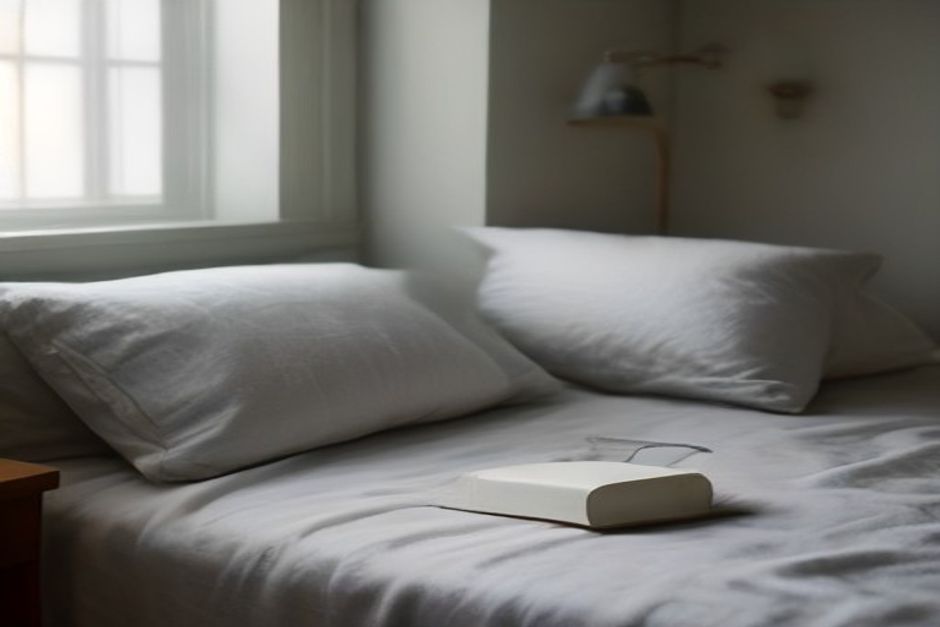
You wake up with a scratchy throat and a heavy head. The mat is right there. And the question arrives on schedule: should I practice, or is this a rest day?
Yoga culture doesn't always help here. "Practice through everything" gets confused with discipline, and rest gets confused with weakness. Both confusions are wrong. Your body is fighting something; the question is whether movement helps the fight or steals from it. Here's an honest framework.
The above-the-neck rule
Sports medicine offers a rough heuristic that translates well to yoga: if your symptoms live entirely above the neck — a runny nose, mild congestion, a scratchy throat, no fever — gentle practice is usually fine. If anything lives below the neck — chest congestion, a hacking cough, body aches, fever, stomach trouble — the answer is rest. Full stop.
Fever deserves its own sentence: never practice with a fever. Exercise raises core temperature; a fever is your body deliberately raising it to fight infection. Adding heat to heat is not discipline, it's interference. The same goes for anything that feels systemic — the flu-like ache where even your hair hurts.
The rule is a heuristic, not a law. When in doubt, err toward rest. Nobody ever set back their recovery by sleeping. Plenty of people have prolonged a cold by "pushing through."
What rest actually is (it's also yoga)
Here's a reframe the tradition itself supports. The yamas and niyamas include tapas — disciplined effort — but also santosha, contentment, and the whole practice is built on ahimsa, non-harming. Forcing a vinyasa flow onto a body that's trying to mount an immune response is not tapas. It's a failure of ahimsa aimed at yourself.
Rest is not the absence of practice. It is the practice, on the days the body asks for it. If that sounds like a cop-out, try lying still for twenty minutes without reaching for your phone and report back on how easy it was. A body scan from bed counts. So does actual sleep, which is when the immune system does its best work — see our sleep page for why that matters.
If it's above the neck: what gentle practice looks like
Say it passes the rule — a head cold, no fever, you feel like a lightly deflated version of yourself. This is not the day for sun salutations, inversions, or anything that makes you breathe hard through a blocked nose. It's the day for the floor:
- Legs up the wall — five to ten minutes. Genuinely restful, mildly helpful for heavy legs, zero demand.
- Supported child's pose over a bolster — though skip this if congestion makes face-down positions miserable. A blocked nose upside down is its own punishment.
- Gentle seated side bends and easy twists — nothing deep, just movement to keep the ribs and spine from stiffening while you rest.
- Slow breathing, no retentions. A few minutes of equal breathing is plenty. Skip kapalabhati and anything vigorous — forceful breathing with an irritated airway is a bad trade.
The test is simple: if you feel better after ten minutes — a little clearer, a little warmer — continue gently. If you feel worse, heavier, or lightheaded, you're done. The mat will be there tomorrow.
The coming-back question
Returning after illness is where people actually get hurt — not from the illness, but from treating day-one-back like they never left. Your capacity dropped. Accept it on purpose:
- First session back: half your usual length and intensity. If you normally flow for an hour, do thirty easy minutes and stop while you still feel good.
- Expect the breath to lag. After a respiratory bug, breath capacity returns slower than enthusiasm. Let ujjayi stay quiet and skip breath holds for a week.
- Hydration matters twice as much. Especially after fever or stomach illness — you'll feel the deficit in every forward fold.
Think of it as the rest-day principle extended: recovery is where the value of practice consolidates. Illness is an involuntary rest week. Meet it the same way.
A word about other people
If you're contagious, stay out of the studio. This is not negotiable etiquette — coughing through savasana in a closed room is ahimsa failing in the other direction. Practice at home or not at all. Your fellow students will never know you spared them, which is the nature of good deeds in public health.
"Discipline is not doing yoga every day. Discipline is doing what the day actually calls for — including, sometimes, nothing."
The honest summary: above the neck, go gently and see. Below the neck, go to bed. And when you come back, come back at half speed. The practice you protect by resting will still be there — which is more than can be said for the practice you trample by pushing. For building a routine that survives real life, sick days included, see how to build a home practice that sticks.