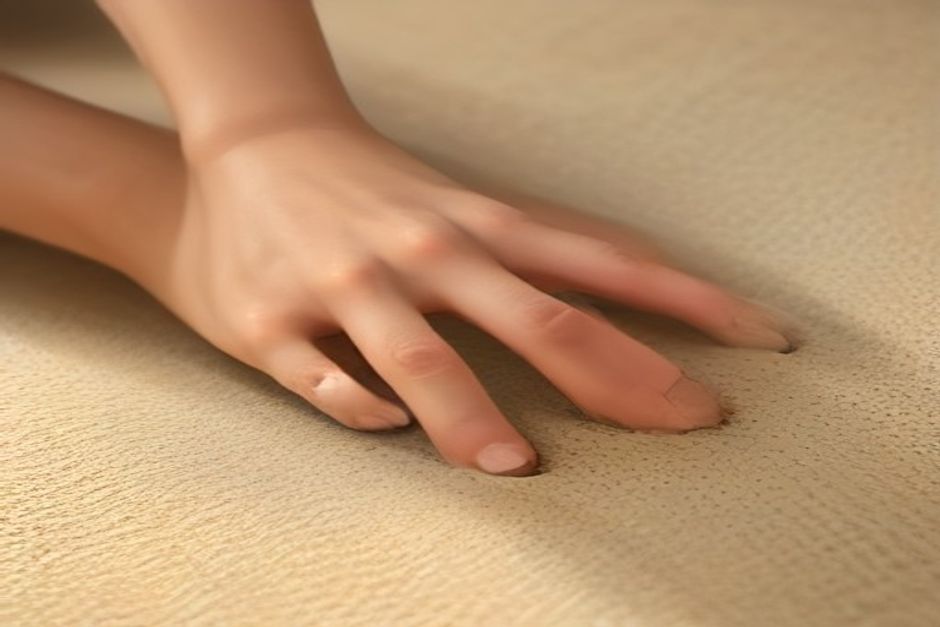
Most human wrists were not designed to be feet. They evolved for grasping, rotating, and fine manipulation — and then yoga asks them to support half your body weight, bent backward at ninety degrees, for minutes at a time. It is no surprise that wrist discomfort is one of the most common complaints in practice, especially for beginners and desk workers. The good news: a little anatomy and a few modifications solve the problem for most people.
What is actually in there
The wrist is not one joint but a crowded intersection. The two forearm bones — the radius and ulna — meet eight small carpal bones arranged in two rows, which in turn meet the long bones of the hand. The whole assembly is held together by ligaments and moved by tendons that run through tight tunnels, including the famous carpal tunnel on the palm side, which also carries the median nerve.
Two design facts matter for yoga. First, there is almost no muscle in the wrist itself — the muscles that move your fingers live in the forearm, and only their tendons cross the joint. Second, the wrist tolerates load best when that load travels straight through the radius, which happens when the hand is well aligned under the forearm. Bent back into deep extension (palm down, fingers forward, weight on top), the joint compresses on the back side and stretches on the palm side — a position it can handle, but one that needs preparation and sensible dosing.
Why yoga loads wrists so heavily
Add up a typical vinyasa class: plank, chaturanga, upward dog, downward dog, repeated a dozen times, plus tabletop, side plank, and maybe an arm balance like crow. Nearly all of it happens in that ninety-degree extension position. For a wrist that types all day and bears weight never, that is a sudden and significant training stimulus. The discomfort that shows up is usually ordinary tissue complaining about an unaccustomed load — annoying, but trainable.
Spread the load: the hand as a tripod
The single biggest fix is how you place the hand. Most people dump their weight into the heel of the palm, right over the carpal tunnel. Instead, think of the hand as a tripod with three contact points: the base of the index finger, the base of the thumb, and the heel of the hand. Then:
- Spread the fingers wide. More surface area means less pressure per square centimeter. The fingers are part of the support system, not passengers.
- Grip the mat lightly with the fingertips. This engages the forearm muscles and takes some load off the joint — 'hasta bandha,' the hand lock, in traditional terms.
- Check the middle finger. It should point straight ahead, which lines the hand up under the radius so force travels the intended path.
- Take weight out of the wrists entirely sometimes. More below.
Warm them up like you mean it
Cold wrists and sudden load are a bad combination. Before practice, spend two minutes on preparation: gentle circles in both directions, palms together in front of the chest rolling side to side, then the backs of the hands on the mat with elbows soft for a mild stretch of the palm side. Finish with a few slow rocks forward and back in tabletop, letting the wrists experience gradually increasing load before you ask for the full dose. It is unglamorous and it works.
Modifications that keep you practicing
If extension is the problem, reduce the angle or change the base of support. None of these are cheating; they are programming.
- Hands on a wedge or rolled mat edge. Elevating the heels of the hands reduces the extension angle. Many teachers consider this the first fix to try.
- Fists instead of flat palms. Weight-bearing on the knuckles keeps the wrist neutral. Works well in tabletop and plank; grip the mat so the fist does not roll.
- Forearms down. Dolphin-style variations replace the wrist entirely with the forearm. Forearm plank builds the same core demand as plank with zero wrist load.
- Dumbbells or push-up handles as grips. Holding a handle keeps the wrist straight while allowing the full pose — a standard physical-therapy workaround.
- Do less, more often. Wrists adapt over weeks. Two weight-bearing practices a week with a day off between them beats five days of pushing through ache.
Strengthening the supporting cast
Because the wrist's movers live in the forearm, forearm strength is wrist health. Simple carries — holding something moderately heavy and walking — build grip and stabilize the joint. Squeezing a soft ball, wrist curls with a light weight in both directions, and the tabletop rocking described above all add up. Expect adaptation to take six to twelve weeks of consistent, moderate loading. Tendons are slow, and that is normal.
It also helps to notice how much of wrist comfort is actually shoulder positioning. When the shoulders collapse forward in plank, the hands take extra shear force. A quick read of shoulder anatomy pays off here, and the alignment cues in our beginner mistakes article cover the common chain of compensation.
The wrist is a small joint doing a big favor. Treat it like a trainee, not a machine: warm it, load it progressively, and give it days off.