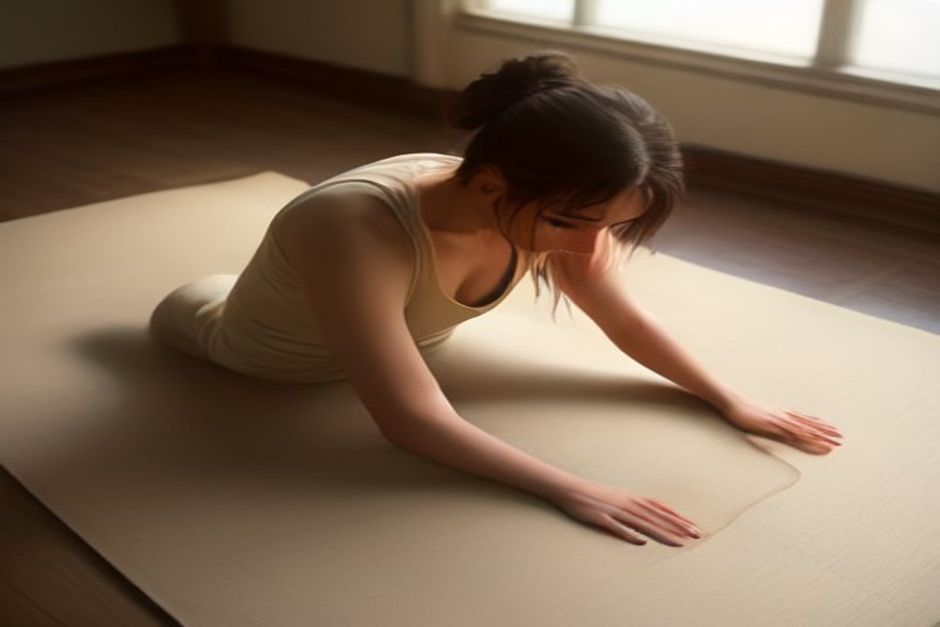
Sphinx Pose has no intimidating Sanskrit name attached to it in most traditions — it is sometimes called a variation of Salamba Bhujangasana, supported Cobra — and that suits it. This is the most democratic backbend in yoga: you lie on your belly, prop yourself on your forearms, and you are there. No pressing, no lifting, no shaking. Yet for people who sit all day, this modest shape may be the single most useful asana in the whole library, because it reverses the exact position modern life holds you in.
Why such a small pose matters
Most of us spend the day in spinal flexion — rounded forward over desks, phones, steering wheels, sofas. Sphinx is sustained, gentle extension: the front of the spine lengthens, the chest opens, the shoulders are invited back into their sockets. Because the pose is supported by the skeleton (forearms on the floor) rather than by muscular effort, you can stay for minutes instead of breaths — long enough for the front body to actually release rather than briefly stretch. It also loads the lumbar spine in extension gently and symmetrically, which many people with stiff, desk-bound backs find genuinely relieving — though it is not a treatment for back pain, and if you have a diagnosed back condition, check with a professional first.
Sphinx Pose — Salamba Bhujangasana
How: Lie on your belly, legs extended behind you, tops of the feet on the floor. Bring your elbows under your shoulders — this placement matters — and rest on your forearms with the palms flat, parallel to each other. Press the forearms down gently, draw the chest forward through the arms, and let the shoulders roll back and down away from the ears. Keep the neck long: gaze softly at the floor a short distance ahead, not up at the ceiling. Stay for one to three minutes, breathing into the front of the chest.
Why: Elbows under shoulders sets the height of the backbend at a sustainable level. If the elbows slide forward of the shoulders, the pose collapses into the neck and jaw; if they pull back behind the shoulders, the low back does all the bending. The sweet spot lets the whole spine share the curve.
Sphinx with a blanket roll
How: Place a firmly rolled blanket under your lower ribs or upper belly before settling onto the forearms, then drape the torso over it.
Why: The roll does part of the lifting for you, turning Sphinx into a near-restorative pose. This is the version for tired evenings, stiff mornings, or anyone whose low back complains about the active version.
Fine-tuning the pose
- The legs are not dead weight. Let them be heavy but not abandoned: kneecaps resting up, legs a comfortable distance apart. Some teachers cue the legs together, others hip-width — for most lower backs, hip-width is kinder.
- Shoulders stay away from ears. The moment the shoulders creep up, the pose migrates into the neck. Press the forearms down, slide the shoulder blades down the back, and let the collarbones widen.
- Breathe forward. The belly is on the floor, so the breath has to go somewhere — invite it into the chest and side ribs. This alone is a useful skill for pranayama practice.
- Duration over depth. Two quiet minutes in a moderate Sphinx will do more for your posture habits than thirty seconds of muscling into the deepest bend you can find.
When to use it
Sphinx works almost anywhere in a practice. Use it early, as the first backbend of the day before anything stronger like Bow or Upward Dog. Use it as a standalone posture break: two minutes on the floor between meetings is a legitimate practice. Use it at the front of a yin-style sequence, where poses are held long and the point is patience rather than effort. And if the backbend bug bites and you want more, the natural next step is Locust — same family, active legs — or a supported Bridge.
There is a quiet lesson in Sphinx that the flashier poses never teach: a pose does not have to be hard to be working. Show up, put your elbows down, breathe, wait. Some days that is the whole practice, and the practice does not mind.