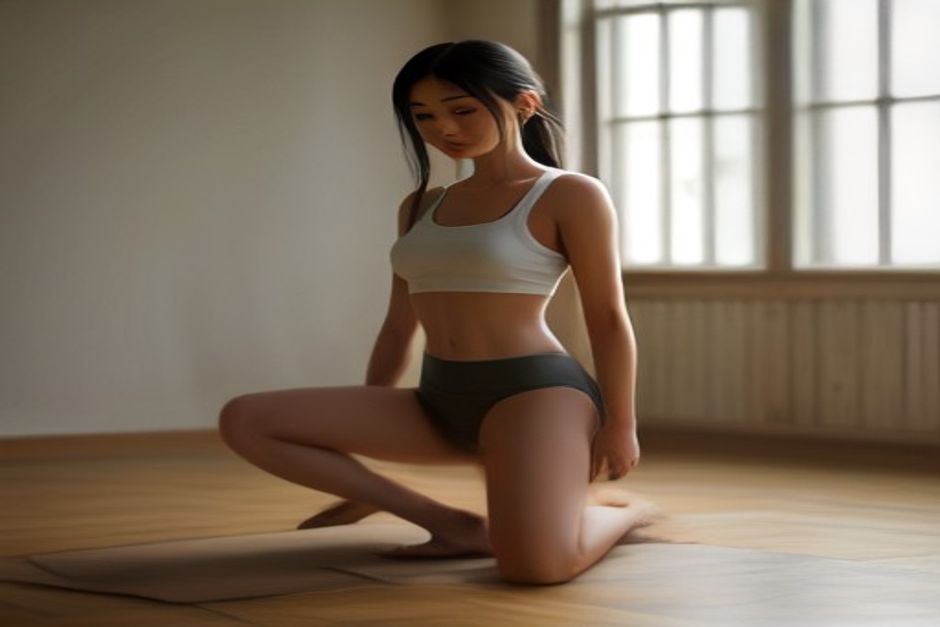
Virasana — hero pose — is kneeling with the knees together and the sitting bones lowered toward the floor between the heels. It shows up constantly in practice: as a meditation seat, as a base for forward folds and twists, as a quad stretch disguised as a resting position. It is also one of the most honest poses in the library, because it gives immediate, unambiguous feedback about two things most people would rather not audit: quadriceps flexibility and knee health.
Those two are related. When the quads are short, they pull the kneecap up hard against the joint; when the hip rotators are stiff, the shin bone twists under the thigh bone to compensate; and the knee — a hinge joint that never agreed to twist — files the complaint. This is why hero pose has a reputation for being knee-risky. The reputation is half earned. The pose is safe for healthy knees taken at the right height, and genuinely unsuitable for some knees at any height. Sorting which situation you're in is most of the work.
The setup: height first, always
Hero on a block — Virasana, propped
How: Kneel with knees together, feet slightly wider than the hips so the sitting bones can land between the heels, not on them. Place a block — or a stack of two, or a firm cushion — under the sitting bones. Hands rest on the thighs, spine tall. Stay for one to three minutes, breathing normally.
Why: The block converts the pose from a maximum-depth quad stretch into a moderate one you can actually inhabit. Sitting between the heels rather than on them keeps the ankle aligned and takes pressure off the kneecap. This version is the full pose, not a diluted one — the classic hero page covers the floor version for bodies that arrive there comfortably.
Hero with a bolster ramp
How: Same kneeling base, but sit on the high end of a bolster or folded blankets so the pelvis is clearly higher than the knees. Let the shins and the tops of the feet press down evenly.
Why: Extra height is for the days — or the decades — when the quads say no. If sitting at any height produces knee pain, the answer is not a lower prop. The answer is a different pose.
One-legged hero fold
How: From hero on a block, extend one leg straight in front, then fold over the extended leg. Thirty to sixty seconds, then switch sides.
Why: This halves the quad load and adds a hamstring stretch — useful when full bilateral hero is too much but some version still serves you. It also shows up in many seated sequences, so it's worth knowing early.
The feedback you should actually listen to
Hero pose produces two distinct sensations, and confusing them is where knees get hurt:
- Stretch in the front of the thighs — broad, muscular, sometimes intense. This is the pose working. Breathable intensity is fine.
- Pain in or around the knee joint — sharp, pinchy, or located at the inner knee line. This is a stop sign, full stop. It means the joint is being twisted or compressed, and no amount of breathing changes joint mechanics.
The inner-knee pinch is the classic warning. It usually means the shin is rotating outward under the thigh to make room the quads haven't provided. More height sometimes fixes it. If it doesn't, hero pose is not your pose right now — the knee anatomy page explains why the joint so dislikes rotation under load.
Where hero fits in a practice
As a meditation seat, hero keeps the spine tall with less hip demand than cross-legged positions — a real option for people whose hips object to the floor. As a quad stretch after running or cycling, it outperforms the standing grab-your-foot version for precision, because the floor gives feedback about alignment. And as the base of reclined hero, it is the mandatory first step — you earn the recline by owning the upright version, in that order, with no exceptions negotiated.
It pairs naturally with a counterpose afterward: extend the legs, point and flex the feet, maybe a gentle downward dog to wake the ankles back up. The tops of the feet work hard in hero, and they appreciate the attention.
Who should skip or modify: anyone with a current knee injury, meniscus history, or knee surgery should clear this pose with their clinician or physio first — kneeling poses are a legitimate clinical question, not a willpower test. Ankle pain on the top of the foot usually responds to a rolled towel under the ankles. And pregnant practitioners in later months often find the knee-together version crowded; knees apart with support is the kind workaround.
The cultural lesson of hero pose is worth the price of admission: it is a sitting pose that most adults cannot simply sit in. That gap between how it looks and how it feels is the whole practice — meeting your actual body, at the height it actually needs, without treating the block as an admission of defeat. The block is the technique.