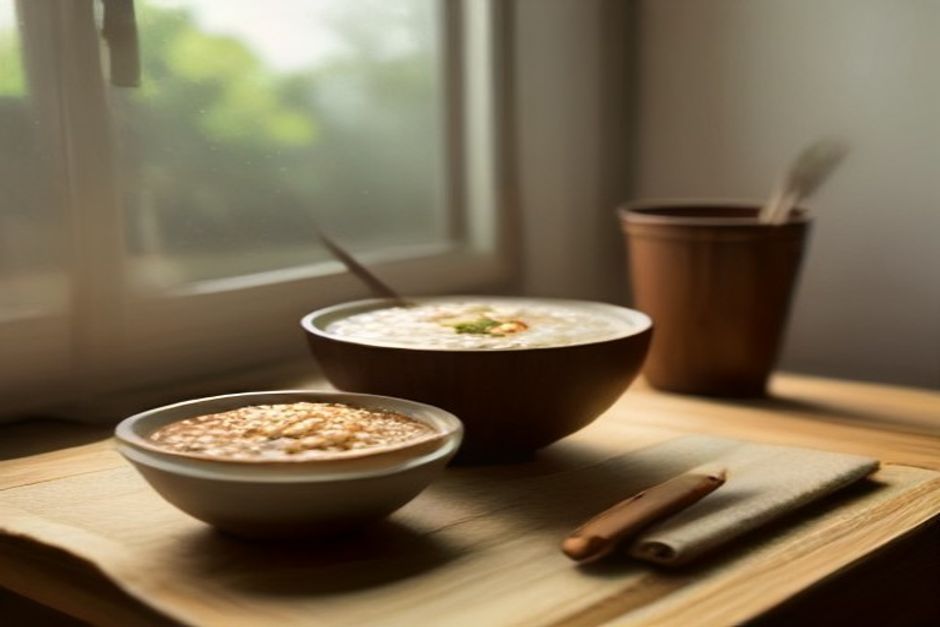
In ayurveda — the traditional Indian system of health that grew up alongside yoga — breakfast is not the most important meal of the day. Lunch is. Breakfast is the warm-up act: something cooked, something simple, sized to wake digestion up rather than bury it. You don't need to buy into doshas and ancient cosmology to find this useful. Strip the philosophy down to its practical core and you get a set of breakfast habits that many people — especially those who practice in the morning — find genuinely comfortable: warm food, modest portions, minimal fuss.
The core idea: cooked beats cold
Ayurveda describes digestion as a fire, agni, that is low in the morning and peaks at midday. Whether or not you like the metaphor, the practical advice follows from it: early on, give the system food that requires little work. That means cooked grains, stewed fruit, warm liquids — and it means the traditional suspicion of cold smoothies, iced drinks, and big bowls of raw cereal first thing. You don't have to accept the reasoning to test the result. Many people who swap a cold breakfast for a warm one simply notice they feel settled rather than sloshing around through morning practice. That's the whole experiment, and it costs one week to run.
Five breakfasts that fit the pattern
- Rice porridge (congee-style): Rice simmered in extra water until it falls apart, with a pinch of salt, a little ghee, and stewed apple or pear on top. Twenty minutes, mostly unattended. This is the single most classic ayurvedic breakfast — soft, warm, and almost impossible to get wrong.
- Stewed fruit with spices: Apples or pears cooked down with cinnamon, cardamom, and a few cloves. On its own for a light morning, or over porridge. Prunes stewed in water are the old-school version for sluggish digestion, and they work for the most ordinary of reasons.
- Khichdi for breakfast: A small bowl of kitchari — yes, the same rice-and-mung dish — is a traditional morning meal in many Indian households. More substantial than porridge, still gentle.
- Warm milk (or oat milk) with dates and spice: Simmered briefly with cardamom and a mashed date or two. Not a meal by itself for most adults, but a reasonable companion to toast or porridge — and a close cousin of the golden milk usually served at night.
- Toast, upgraded: There's no rule against bread. Warm toast with ghee and a little honey fits the pattern — cooked, warm, simple. The tradition would frown on jam from the fridge; you may decide to live dangerously.
What to skip — and what's fine to ignore
Skip, at least as an experiment: large cold smoothies before practice, iced coffee on an empty stomach, and the heroic breakfast eaten forty minutes before a morning class. A full stomach and forward bends are old enemies, and no tradition needed to tell us that.
Feel free to ignore: strict rules about what your "dosha" should eat, expensive ayurvedic breakfast products, and any claim that a particular spice will detoxify anything. The useful parts of this tradition are behavioral — eat warm food, eat modestly in the morning, eat at roughly consistent times, and don't eat a large meal right before you move. The mystical packaging is optional.
Breakfast and morning practice
If you practice yoga first thing, the ayurvedic answer is simple: practice first, eat after. A cup of warm water or light tea beforehand, breakfast when you're done. This matches the practical advice in our morning practice guide and saves you from negotiating with a full stomach in downward dog. If you wake up genuinely hungry, stewed fruit or a few sips of warm spiced milk will carry you through a gentle session without weighing you down.
Timing matters more than ingredients. A warm, modest breakfast at a consistent hour does more for most people's energy than any superfood rotation. Pair it with the rest of a sane routine — an early night, a regular practice — and you've captured about ninety percent of what ayurvedic breakfast wisdom has to offer a modern reader. The broader picture lives in our nutrition section.
Warm, cooked, and enough — not more. Breakfast is the warm-up act; lunch gets the spotlight.