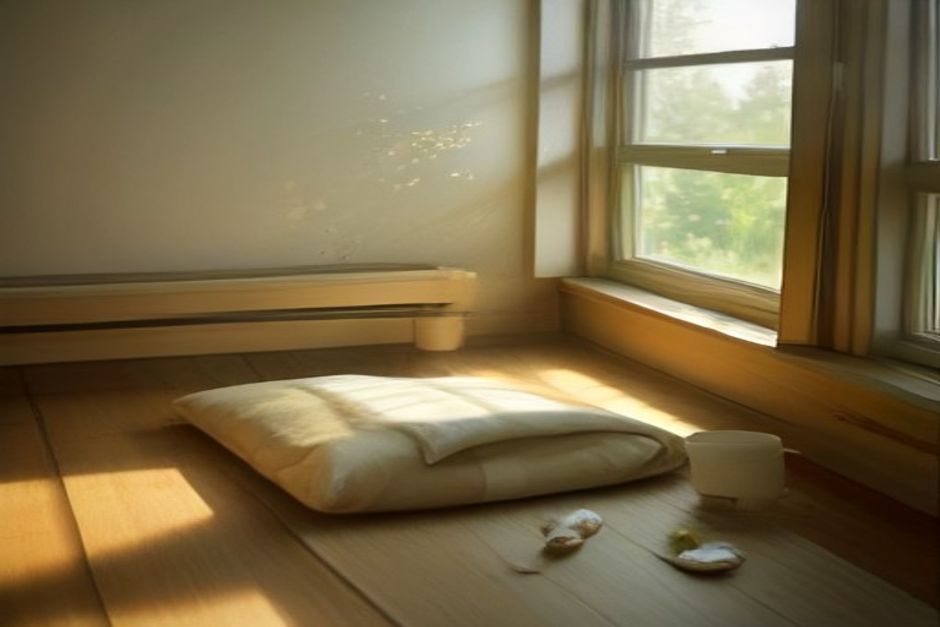
January gets all the credit for fresh starts, but anyone who has actually tried to build a habit in January knows it is a terrible month for it: dark, cold, and powered by guilt. September is the better restart. The light is still decent, the calendar naturally reorganizes itself — schools, work, studios all resume their shapes — and the summer's beautiful chaos is over. If your practice dissolved somewhere between the first heatwave and the last vacation, September is when you rebuild it. Quietly.
First: an honest audit, not a guilt trip
Before you plan the new routine, look at what summer actually did. Maybe you practiced less but walked more. Maybe you did ten lazy minutes on a hotel floor twice a week, which counts. Maybe you did nothing, which is also information — it tells you the routine you had did not survive contact with disruption, so the rebuilt one should be more disruption-proof, not more ambitious. The question is never "how do I get back to where I was?" It is "what does practice look like in the life I actually have this autumn?"
Rebuild at half size
The classic September mistake is the bounce-back fantasy: daily hour-long practices, a new studio membership, maybe a 30-day challenge. This is January thinking in a September costume, and it fails the same way. The better move is to rebuild at half the size you think you should, and let the rhythm establish itself before the volume does.
- Week one: Ten minutes, three times. Fixed days and times, written in the calendar like appointments. The ten-minute practice was built for exactly this phase.
- Weeks two and three: Ten minutes becomes twenty, or three sessions become four. Change one variable, not both.
- Week four onward: Add what you missed — a longer weekend session, a class, a workshop. By now the base rhythm exists; you are decorating a standing structure instead of pouring a foundation in the rain.
This is the same logic as rhythm over streaks: you are building something that bends, not a chain that shatters on the first bad week. Because autumn will bring a bad week. It always does.
Use the season's actual advantages
September has real, specific gifts for practice that no other month matches:
- Morning light without summer's 5 a.m. alarm. If you have wanted a morning practice, this is the easiest month to start one — the sun cooperates, and the air has enough edge to make movement feel good.
- Cooler evenings. Longer holds, slower flows, and restorative poses stop feeling like a sauna sentence. The body that refused forward folds in July accepts them in September.
- The back-to-school current. Studios launch their autumn schedules, teachers return, new beginner courses start. If you have been meaning to try a class or revisit a structured course, the social momentum of September does half the work for you.
A simple September template
For the reader who wants it concrete, here is a realistic week:
- Two short home practices (15–20 minutes): cat-cow, a few sun salutations or standing poses, one hip opener, savasana. Unglamorous and sufficient.
- One longer session (45–60 minutes): a class, a video, or your own full sequence, scheduled for the day you reliably have time — not the day you wish you did.
- One micro-practice on your worst day: five breaths at the desk counts. It is the placeholder that keeps the rhythm alive when life votes otherwise.
What to leave behind
A restart is also a chance to drop what was not working. The class you kept attending out of obligation. The pose goal that belonged to a body you had three years ago. The app subscription you open out of guilt. September's theme, if it has one, is keeping what serves the coming season and releasing the rest — the autumn practice continues this thought as the weeks darken.
"Autumn is a second spring when every leaf is a flower." — Albert Camus. He was not writing about yoga, but he could have been.
Do not make September a referendum on your discipline. Make it what it actually is: a month with good light, cool air, and a natural pause long enough to lay a mat down. Ten minutes, three times, week one. The rhythm will take it from there.