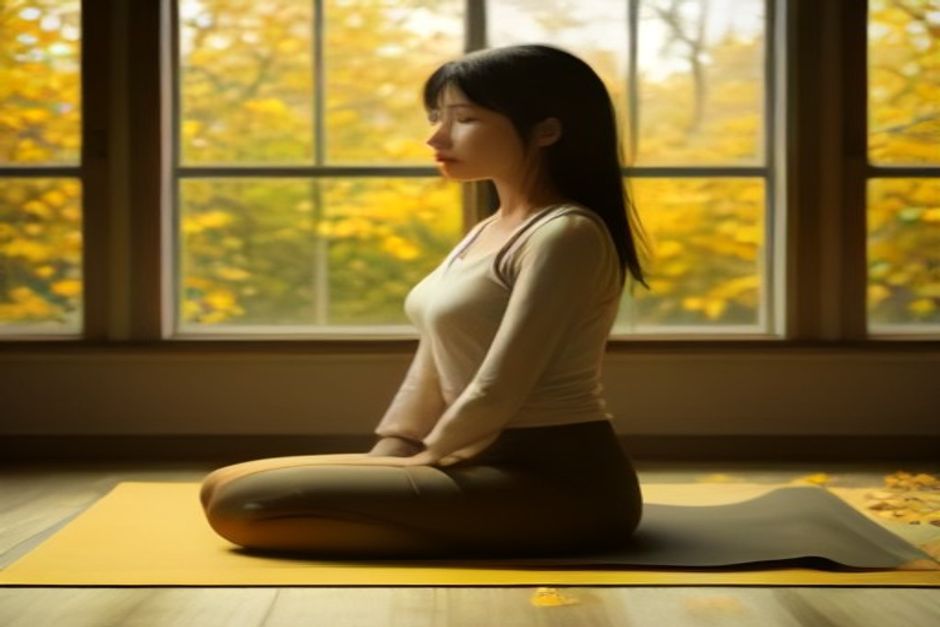
Summer practice is easy to love: long light, warm muscles, the body already halfway loose before you unroll the mat. Then October arrives, the mornings go dark, and the same practice that felt effortless in July suddenly feels like an argument. This is not a discipline problem. It is a season, and it is asking for a different practice.
Every tradition that works with seasons says roughly the same thing about autumn: it is a time of descent and drawing inward. Leaves fall; energy that spent the summer pointing outward starts pointing home. You can fight that with willpower, or you can let your yoga do what it has always claimed to do — meet you where you actually are. We prefer the second option.
Three shifts to make when the light changes
1. Trade speed for duration
Summer bodies handle fast, flowing vinyasa well because they arrive warm. Autumn bodies arrive cold and stiff, and asking them for rapid transitions first thing is asking for tweaked hamstrings. Keep the same poses; change the clock. Five breaths per pose instead of one. Longer holds in Cat-Cow before anything demanding. A slow sun salutation — yes, even when there is no actual sun — done at half speed warms more thoroughly than three fast rounds done resentfully.
2. Fold forward more
Forward bends are autumn's natural vocabulary: quiet, inward, unhurried. A standing forward bend with a generous knee bend, a long seated forward fold, Child's Pose held for two full minutes — these poses ask nothing performative of you. They also stretch the back body, which is where cold weather and more sitting tend to lodge themselves. The point is not depth. The point is the particular calm that comes from turning the face toward your own legs and away from the world for a while.
3. Ground through the standing poses
Autumn can feel scattered — wind, deadlines, the year's to-do list suddenly visible in the headlights. Standing poses are the antidote because they are hard to do absentmindedly. Mountain Pose done properly, feet actually paying attention, is worth more in October than in June. Add Warrior I and Goddess with steady holds, and finish standing work with Tree Pose — wobbling included. Balance work in a season of ground slippery with leaves is practical training disguised as philosophy.
The light question
Shorter days genuinely affect mood and energy for most people; for some it tips into seasonal affective disorder, which is a real condition deserving real care, not just a bolster. Yoga helps at the margins — movement, breath, and routine all nudge mood upward — but it is not a lamp and not a doctor. If autumn reliably flattens you, a lightbox and a conversation with a professional belong in the toolkit alongside the mat. For the practice itself, schedule it earlier when you can: a 4 p.m. practice in fading light feels entirely different from a 7 p.m. practice in full dark, and the first one is usually easier to start.
The letting-go part, without the greeting card
You will read a lot this time of year about autumn teaching us to "let go," usually over a picture of a leaf. Underneath the cliché is a practical observation: the body in autumn is more receptive to release work — longer exhales, supported rest, less striving. So use it. Extend your exhales to twice the length of your inhales during practice (the mechanics are in our daily breathwork article). End every session with a proper Savasana under a blanket rather than a skipped one. If you have been meaning to try slower styles, this is their season — restorative yoga and the long holds of yin both make more sense in November than they ever will in May.
A simple autumn week
- Two slower flow days: sun salutations at half speed, standing poses with long holds.
- Two quiet days: forward folds, twists, legs up the wall, twenty minutes maximum.
- One restorative day: props, blankets, almost no effort at all.
- One day outside: a walk counts. Watching actual leaves fall beats visualizing them.
Our winter practice guide picks up where this leaves off, when the season stops being picturesque and starts being serious. For now: slower, lower, longer exhales, and a blanket in Savasana. The trees are not hustling. You do not have to either.