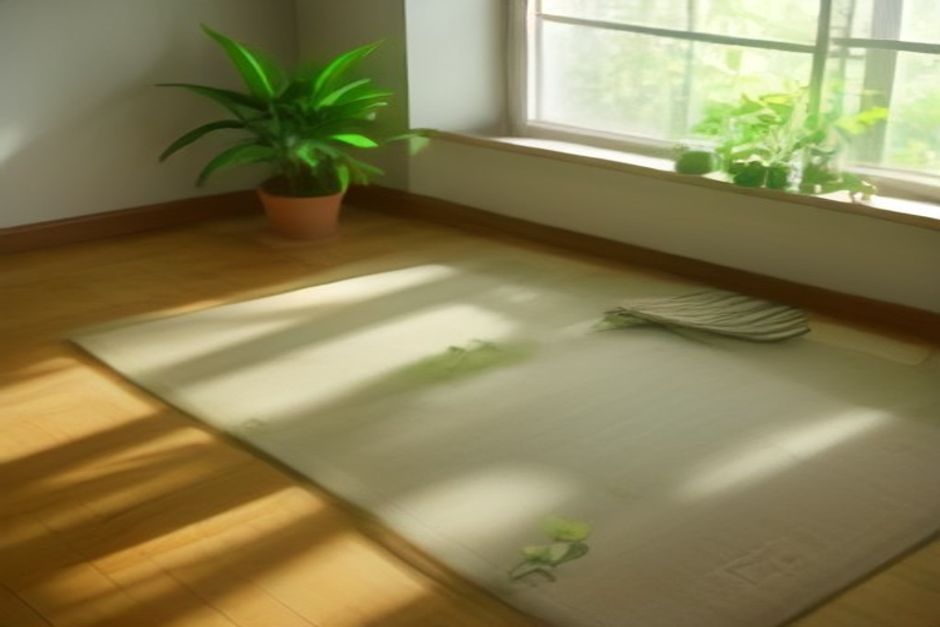
The first properly bright morning of spring does something to a person. The light arrives earlier than it has any right to, the birds are unreasonably confident, and the body — which has spent months in coats and chairs — gets an urge to move that it hasn't felt since October. This is the moment for a morning practice, and spring is the easiest season to build one: the light itself does half the waking up. This sequence takes twenty minutes, needs a mat and an open window, and is built on one principle: spring energy is real, but it should be spent gradually, not in one heroic Sunday session that leaves you sore until summer. The broader seasonal picture lives in the spring practice guide; this page is just tomorrow morning.
The logic: lighten, don't purge
Every spring, the wellness world discovers detoxing. Let us be plain: your liver and kidneys detox you continuously and competently, no tea required, and no amount of twisting wrings toxins from your organs like water from a sponge. What spring genuinely offers is simpler and better — more light (which resets sleep timing), warmer air (which makes movement kinder), and a natural restlessness that makes habit-building easy. A morning practice in spring isn't a cleanse. It's a way of spending the season's energy on something that pays interest: morning practice is easier to keep in bright months than dark ones, and a habit built by May tends to survive November.
Minutes 0–3: wake the breath first
Before any movement, sit — on the bed's edge, on a cushion, on the floor by the window. Spring mornings are for air.
Sun breath — Surya Bhedana
How: Right-thumb alternate-nostril breathing: inhale through the right nostril, exhale through the left, one to two unhurried minutes. Details and contraindications on the Surya Bhedana page.
Why: Traditionally the warming, energizing breath — the sun channel — and a calmer way to caffeinate the system than reaching for the phone. If breathwork feels fiddly at 6 a.m., simply take ten slow breaths with the exhale slightly longer. That counts.
Minutes 3–10: salute the actual sun
Winter practice hides from the season; spring practice faces it. Move to the mat, ideally where the light lands.
Cat-Cow into Downward Dog
How: Five slow rounds of Cat-Cow, then press back to Downward Dog, pedaling the feet gently for a minute, bending one knee then the other.
Why: The spine wakes segment by segment, and the calves and hamstrings — hibernating since autumn — get their first honest stretch of the day. Bent knees, always, in the morning.
Slow sun salutations — Surya Namaskar
How: Three to five rounds at half your summer pace, one breath per movement, knees down in the push-up portion without shame. The full map is on the sun salutations page.
Why: It's the whole practice in miniature — forward fold, backbend, plank, inversion-ish dog — and it raises the heart rate just enough to count as having woken up. Three slow rounds beat eight fast ones for a body between seasons.
Minutes 10–16: open what winter closed
Low lunge with a side reach — Anjaneyasana variation
How: From a low lunge, back knee down, sweep both arms up, then lean gently away from the front leg. Four breaths per side.
Why: Hip flexors and side body in one move — the two regions winter compresses hardest. The side reach is where the "opening the windows" feeling physically lives.
Standing forward fold, held
How: Feet hip-width, fold with soft knees, hold opposite elbows, sway gently for six to eight breaths. Full notes at Standing Forward Bend.
Why: A long, unforced fold after the standing work settles the nervous system back down — you're waking up, not winding up.
Minutes 16–20: one standing pose, then stillness
Finish standing: Tree Pose, thirty to forty-five seconds per side, at the window if possible, eyes on something alive. Then lie down for two minutes of Savasana — morning Savasana is not about relaxation but about letting the practice land before the day's noise starts. Get up slowly, drink some water, and let the light do the rest.
Keeping it through the season
The spring-morning habit succeeds or fails on friction, not willpower. Three rules that work: the mat stays visible (a rolled mat in a closet is a mat that doesn't get used), the sequence stays the same for at least a month (variety is the enemy of habit at 6:30 a.m.), and twenty minutes is the ceiling, not the floor — on the mornings when even that is too much, do the first three minutes of breath and stop. A practice you keep at 40% beats a perfect one you abandon by April.
Spring does not ask you to become a new person. It asks you to open the windows for the one you already are.