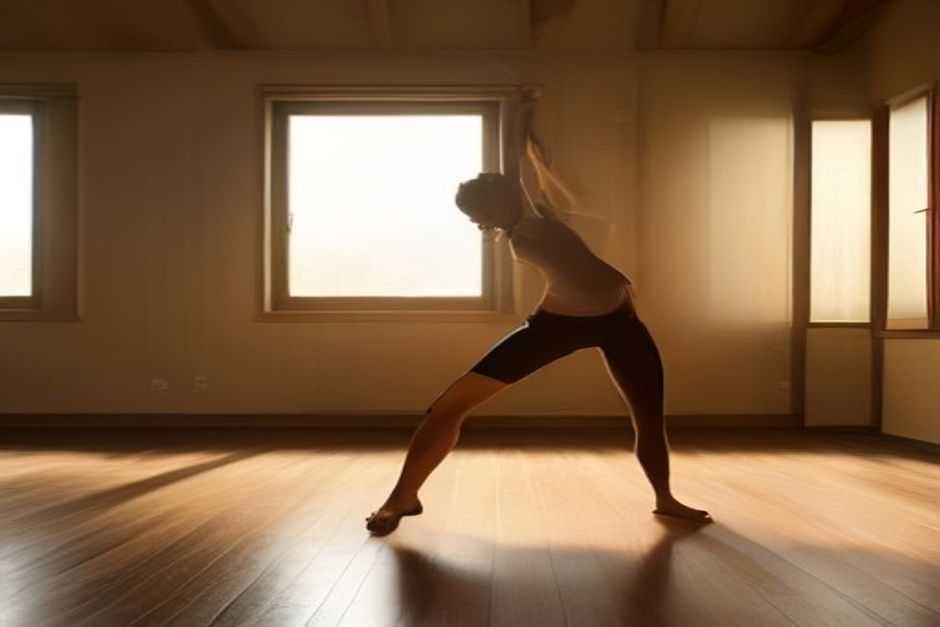
If you've been to a yoga class in the last twenty years, you've done vinyasa (विन्यास) — or at least been in a room labeled with it. On modern schedules it means "flow": a style where poses are strung together in continuous movement, each motion riding an inhale or an exhale. But the word is older and more precise than the marketing, and its older meaning turns out to be the thing that makes the modern style actually work.
The root: placing in a special order
Vinyasa is built from vi ("in a special way, with discrimination") and nyasa ("to place, to put down"). So: a deliberate, ordered placing. Long before it meant flowing between poses, the word belonged to ritual — the vinyasa of a Vedic ceremony was the correct sequencing of its steps. Do them out of order and the ritual doesn't hold. The key idea was never "movement"; it was intentional sequence: this step exists to prepare the next one.
From ritual order to flowing poses
The modern usage runs through one man: T. Krishnamacharya, the South Indian teacher whose students (Pattabhi Jois, B.K.S. Iyengar, Indra Devi, his son Desikachar) essentially founded the major modern styles. In Krishnamacharya's teaching, vinyasa meant the way you enter and exit a posture — not teleporting into Warrior I, but arriving through a counted, breath-led sequence of positions, each one earning the next.
Pattabhi Jois systematized this into Ashtanga Vinyasa Yoga, where every movement has a number and a breath: inhale, arms up (one); exhale, fold (two); inhale, lengthen (three) — all the way through sun salutations and into the fixed series. The "vinyasa" also came to mean a specific thing: the mini-sequence of chaturanga, upward dog, and downward dog that resets the body between sides and postures. When a teacher says "take a vinyasa," that's the specific ritual unit they mean — a descendant, in miniature, of the old idea that order matters.
What makes a class "vinyasa" today
Contemporary vinyasa (or "flow") loosened the fixed Ashtanga series into free sequencing, but kept the core mechanics:
- Breath leads, movement follows. The inhale starts a half-second before the arms rise; the exhale begins before the fold. Movement rides the breath like a surfer on a wave — never the reverse. If you can't keep the breath smooth at the speed of the class, the class is too fast for you today.
- Transitions are poses. The space between postures isn't dead time — it's where most of the strength and most of the injuries live. Lowering through chaturanga with control is the practice; collapsing through it is a loan your shoulders will be asked to repay.
- Sequences have logic. Good vinyasa builds: warm the spine (cat-cow), wake the legs, open what's about to be asked, peak, then unwind. The old ritual meaning — ordered placing — is still the difference between a sequence and a pile of poses.
- Repetition creates meditation. Because the choreography becomes familiar, attention is freed from "what's next?" and can drop into breath and sensation. A well-paced flow is one of the more reliable on-ramps to the absorbed state the tradition calls meditation in motion.
Vinyasa vs. its neighbors
- Versus Hatha: in a hatha-style class you hold poses in stillness; in vinyasa you visit them. Neither is superior — holds build depth, flow builds heat and continuity.
- Versus Ashtanga: Ashtanga is vinyasa with a fixed script and a fixed count; modern flow is vinyasa with improvisation. Same grammar, different essays.
- Versus Yin: vinyasa works muscles dynamically and briefly; yin loads connective tissue passively and long. Many practitioners do well with both across a week.
Practicing it honestly
A few ground rules that keep flow practice sustainable:
- Budget your vinyasas. You are allowed to skip the chaturanga-to-updog reset and step back to child's pose instead. Shoulders have a finite number of quality lowers per class; spend them where they count. A strong plank held well beats five sloppy lowers.
- The breath is the speed limit. If you're mouth-breathing or holding your breath, slow down or drop to the knees. Smooth ujjayi is not decoration — it's the tachometer.
- New to flow? Start with the foundations in yoga basics and a beginner-paced class; the choreography is much easier to learn at half speed.
Vinyasa means the order is part of the practice. Anyone can do a pose; doing it as one deliberate step in a breath-led sequence is the actual skill.