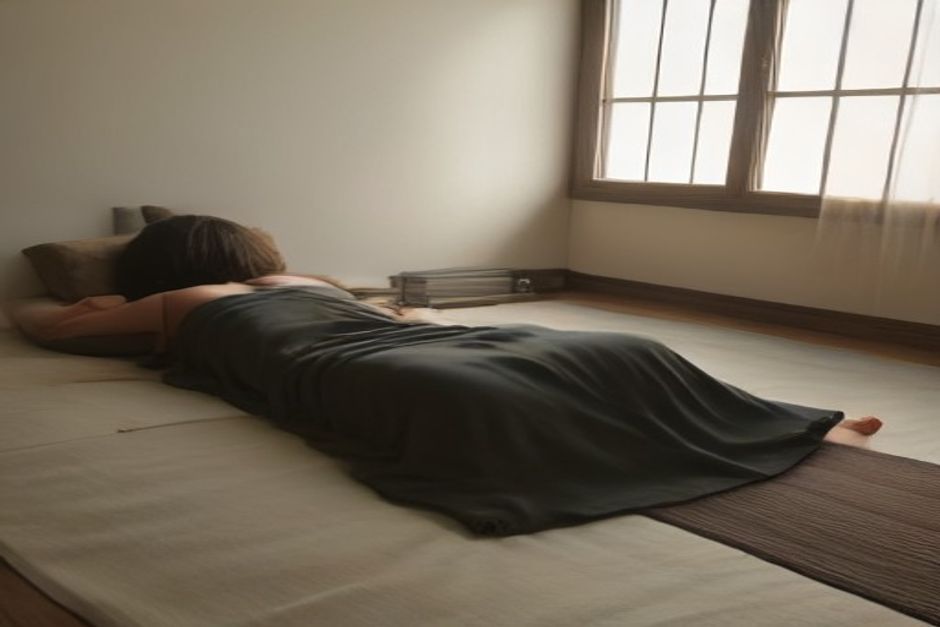
Both get filed under "mindfulness," both involve closing your eyes, and both have research behind them. But meditation and yoga nidra are doing different jobs. Meditation is training — a workout for attention, with all the mild frustration that implies. Yoga nidra is permission — a guided descent toward the edge of sleep where the instruction is, essentially, stop trying. Confusing them leads people to quit the one they actually needed.
Meditation: the attention workout
Seated meditation, in any of its forms — breath counting, body awareness, mantra, open monitoring — has one repeated move: notice where attention went, bring it back. That's it, and that's everything. The wandering is not the failure; the return is the rep. Over weeks the skill transfers off the cushion: you notice the irritation before the email, the anxiety spiral at step two instead of step twenty.
The catch is that meditation is effortful, and effortful is the wrong tool at the wrong time. Practicing when you're profoundly depleted can feel like being assigned homework during a collapse. It also doesn't directly address exhaustion — a twenty-minute sit after a sleepless night may leave you clearer and just as tired.
Yoga nidra: the guided shutdown
Yoga nidra — "yogic sleep" — is done lying down, usually in a comfortable savasana with blankets, following a recorded or live voice. The script moves through a body scan, breath awareness, sometimes pairs of opposite feelings or images, and an intention (sankalpa). The form was systematized in the 1960s by Swami Satyananda from older tantric practices; modern secular versions get rebranded as NSDR, "non-sleep deep rest."
The destination is the hypnagogic borderland — the drowsy zone between waking and sleep where the body runs its deep-rest programs while a thin thread of awareness stays online. Falling fully asleep is common and, by most teachers, forgiven: the body takes what it needs. Sessions run twenty to forty-five minutes, and the after-effect is less "I meditated well" and more "someone swapped my battery."
Different tools for different tired
- Wired and ruminating: start with meditation. The spinning mind needs a job, and returning attention is a job. Even five minutes teaches the spiral that it doesn't run the building.
- Depleted and burnt out: nidra. Asking an exhausted system to train is bad coaching. Lie down, press play, let the voice carry you.
- Can't sleep: nidra in bed, as a ramp. Our sleep page and the yoga-for-sleep routine build around exactly this.
- Long-term change in reactivity, focus, self-knowledge: meditation, daily, in small doses. The research base here is the deepest of any contemplative practice.
- Recovering from illness, grief, travel, a newborn: nidra, unapologetically. It's the least demanding practice that still counts as practice.
If you hate meditation, start here
A large number of people who "can't meditate" turn out to be people who were asked to train before they had any rest in the tank. A few weeks of nidra often changes that — not because nidra teaches the same skill, but because a rested nervous system stops treating silence as a threat. Many practitioners report that after a month of regular nidra, sitting practice stops feeling like punishment. Apps and recordings make both easy to try; the meditation app roundup covers which ones are worth your phone's home screen.
How they combine
They stack well in both directions. Ten minutes of meditation after a nidra session often goes deeper than a cold start — the noise floor is lower. And a nidra session on a day you'd otherwise skip practice keeps the daily thread unbroken without demanding effort you didn't have. What doesn't work is treating nidra as a permanent replacement for a sitting practice you were avoiding because it was hard; rest and training are both food, but they're different meals.
Meditation teaches you to stay. Yoga nidra teaches you to let go. A sane life needs both verbs.