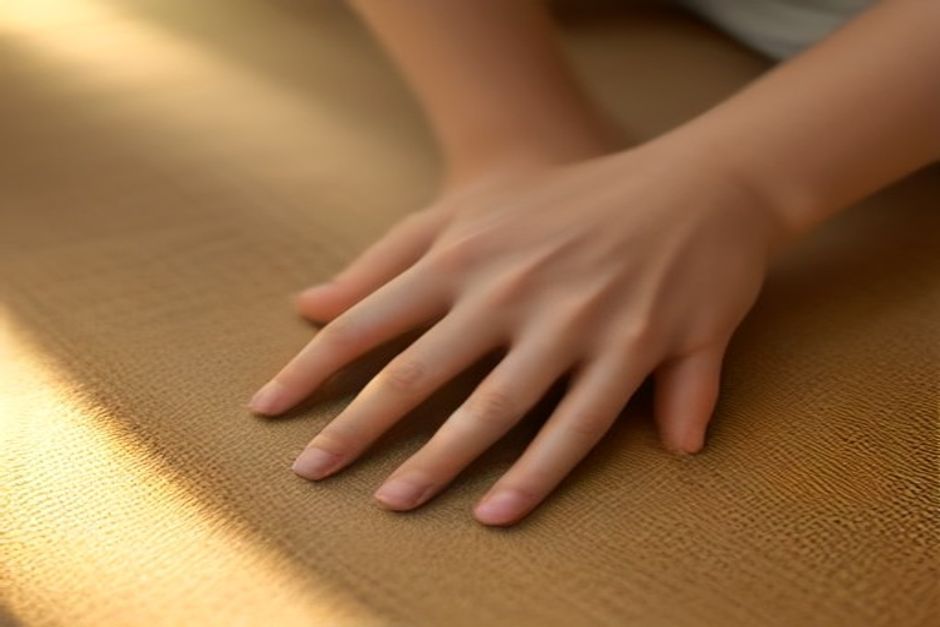
Nobody comes to yoga for their hands. Hands are just the things at the end of your arms that touch the mat. Then one day your wrists ache in plank, your fingers cramp in down dog, or crow pose feels like balancing on two overcooked noodles — and suddenly the hands are the whole story. Each hand contains 27 bones, over 30 muscles' worth of attachments, and a grip system evolved for hanging from branches, not pressing into floors. Understanding a little of that machinery makes every weight-bearing pose easier and safer.
The layout, briefly
The wrist is not one joint but a crowd of eight small carpal bones arranged in two rows, held together by ligaments and moved by tendons that run down from the forearm. This is important: the fingers have no muscles in them. Grip strength is generated in the forearm and transmitted through tendons, like cables operating a crane. The palm has its own small muscles for fine control, and the whole structure is stabilized by the thenar and hypothenar eminences — the fleshy pads at the base of thumb and little finger. When a teacher says "press through the whole hand," those pads are a large part of what they mean.
What the hand does in weight-bearing poses
In downward dog, plank, and every arm balance, the hand becomes a foot. Specifically, a tripod: the base of the thumb mound, the base of the little-finger mound, and — a little surprisingly — the heel of the palm share the load, while the fingers spread and grip lightly to steer. Two common errors follow. First, dumping all weight into the wrist crease with flat, passive fingers, which jams the carpals and is why wrists complain. Second, gripping so hard the knuckles go white, which floods the forearms with tension and fatigues you in three breaths. The target is middle ground: rooted through the mounds, fingers alive but relaxed.
If wrist discomfort is already part of your practice, our page on wrist anatomy and care goes deeper on angles, props, and when to back off.
Grip and arm balances
In crow pose and its relatives, the hands do something subtler than holding you up: they make micro-corrections, dozens per second, like the constant small steering inputs of riding a bicycle. Tip too far forward and the fingers press; tip back and the heel of the hand loads. This is why arm balances improve grip endurance so quickly, and why cold, stiff hands balance badly. Warm hands are not a luxury before arm balances — they are equipment checks.
Grip strength beyond the mat
Grip is one of the more honest measures of general strength, and it quietly governs daily life: jars, doorknobs, shopping bags, holding a railing when you trip. Desk work tends to produce hands that are good at hovering over keyboards and little else — fingers curled, wrists extended, forearms under-used. Yoga's weight-bearing poses are a genuine counterweight to that, but only if the hands are working rather than suffering.
Simple drills that actually help
- Tabletop finger presses: On all fours, lift the palms while keeping all ten fingertips down, then lower. Ten slow reps builds the small muscles of the hand without any wrist load.
- Forearm plank with fists: If wrist extension is the limiting factor, make fists and bear weight on knuckles (padded mat) or take forearms down. Same core work, zero wrist angle. The pose is not the point; the load is.
- Towel scrunches: Seated, spread a towel under one bare foot and scrunch it toward you with your toes — a classic for feet, and the exact same drill works for fingers on a table. Old-fashioned, effective.
- Warm-up circles and wrist rocks: Thirty seconds of gentle circles, then palms-down stretches, before any weight-bearing practice. Cold tendons are grumpy tendons.
- Farmer's carry: Not yoga, but two heavy bags carried honestly around the kitchen builds grip faster than most drills. Groceries count.
Your hands are the first thing the floor ever feels in this practice. Treat them as trainees rather than furniture — spread, root, steer, rest — and everything built on top of them, from the whole structure upward, gets sturdier. The arms balances come later. The good hands come first.