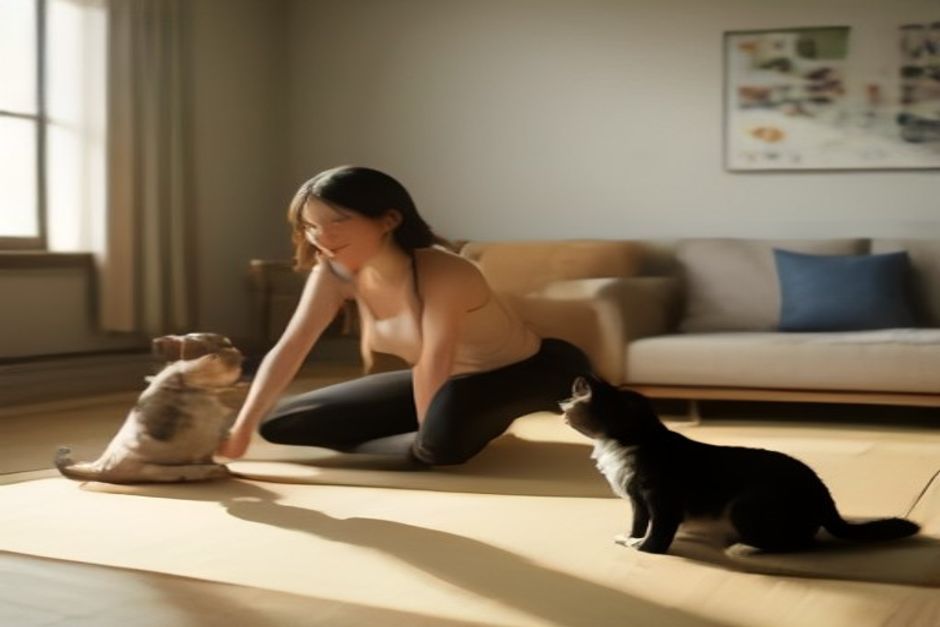
Adult yoga and kids' yoga share a name and almost nothing else. An adult practice is quiet, sustained and inward. A child's practice is loud, brief, and mostly about pretending to be animals. Both are real yoga — and the second kind may be the more honest one, because it does what yoga is supposed to do: it meets a body and mind exactly where they are. Where they are, if your student is six, is approximately four minutes of attention, a deep suspicion of stillness, and a total inability to take a pose too seriously. Work with that and yoga with kids works beautifully. Fight it and you'll both quit by Thursday.
The attention-span math
The honest formula: a child sustains focus for roughly their age in minutes, plus one or two. A five-year-old gives you about six minutes of real attention; a ten-year-old, maybe twelve. This isn't a limitation — it's the design spec. It means:
- Poses are held in breaths, not minutes. Three breaths is a long hold. Five is an achievement.
- Everything changes every two minutes. The session is a playlist, not a composition: pose, game, breath trick, pose, story, done.
- The whole practice is 10–15 minutes. Ending while they still want more is the single best retention strategy. The day they ask for "one more pose," you've won the long game.
Poses that work because they're games
The animal circuit — ages 3 to 8
How: Cat-cow becomes "angry cat, happy cow," complete with sounds. Downward dog is a dog stretching after a nap — and dogs wag their tails (hips side to side) and bark. Cobra hisses. Frog squats hop across the mat. Child's pose is "mouse hiding from the cat."
Why: The names in yoga were always half-invented by someone watching animals — kids are simply doing it with the original enthusiasm. Sounds matter: humming, hissing and mooing are breath control wearing a costume.
The balance challenge — ages 5 to 12
How: Tree pose as a contest: who can stand on one leg while the other person "tries to blow the tree down" with gentle waves of their arms nearby. Then swap. Add a story — the tree grows roots, weathers a storm — and a wobbly pose becomes an epic.
Why: Balance improves faster in children than in adults, and kids will hold a wobble twice as long if there's narrative at stake. Falling out is part of the game, which conveniently is also the lesson: the tree falls, the tree grows back.
Partner poses with a parent
How: Back-to-back breathing (sit back to back, feel each other breathe), double downward dog (parent as the base, child walks feet onto the parent's lower back — see partner yoga basics), and "flying child" for confident parents with small kids: the child lies across the parent's shins, parent on their back, and lifts. Giggling is mandatory.
Why: For a child, the parent's body is the world's best prop, and shared balance builds trust in a way no lecture about trust ever will.
Breathing games — the ones you'll use for years
How: "Hot chocolate breathing" — hold an imaginary mug, smell the chocolate (slow inhale through the nose), blow to cool it (long exhale through the mouth). Five rounds. Older kids can learn bee breath, which they find hilarious and which works on jangled nerves at any age.
Why: This is the tool that leaves the mat. A child who learns to take three slow "hot chocolate" breaths before a meltdown, a test, or a shot at the doctor has received something worth more than every pose combined. Parents report these breathing tricks get borrowed constantly — by the parents.
How to run a family session
- Same time, short leash. Ten minutes before dinner or before bed, a few times a week. Predictability does more than duration — the same logic as any home practice, compressed.
- Let them lead sometimes. "You teach me a pose" produces the most engaged child you've ever seen and, occasionally, genuinely alarming new poses. Fine. Creativity over alignment at this age.
- Props are toys. Scarves to toss and catch on the exhale, a stuffed animal to balance on the belly for breathing practice, blocks as stepping stones across an imaginary river.
- Never force stillness. Savasana with kids is thirty seconds of "sleeping statue," and that's correct. Stillness that arrives on its own — after ten minutes of movement, it sometimes does — is worth ten forced attempts.
What to skip
Headstands and shoulderstands — young necks have no business under body weight. Long holds of anything. Corrections that sound like criticism: at this age the pose being "wrong" matters less than the child wanting to come back tomorrow. And any competitiveness between siblings in the same session — run them at different times if comparison starts to sour it.
What they're actually learning
Not hamstring length. Kids are already bendy; flexibility is not the prize. What they're practicing is noticing — where their body is in space, what a slow breath does to a fast feeling, how to fall out of a pose and try again without it meaning anything bad. Adults pay good money to relearn exactly these things. A child who grows up with them doesn't need the relearning.
Kids' yoga isn't training for adult yoga. It's the original version — movement, breath and play — before anyone decided it had to be quiet.