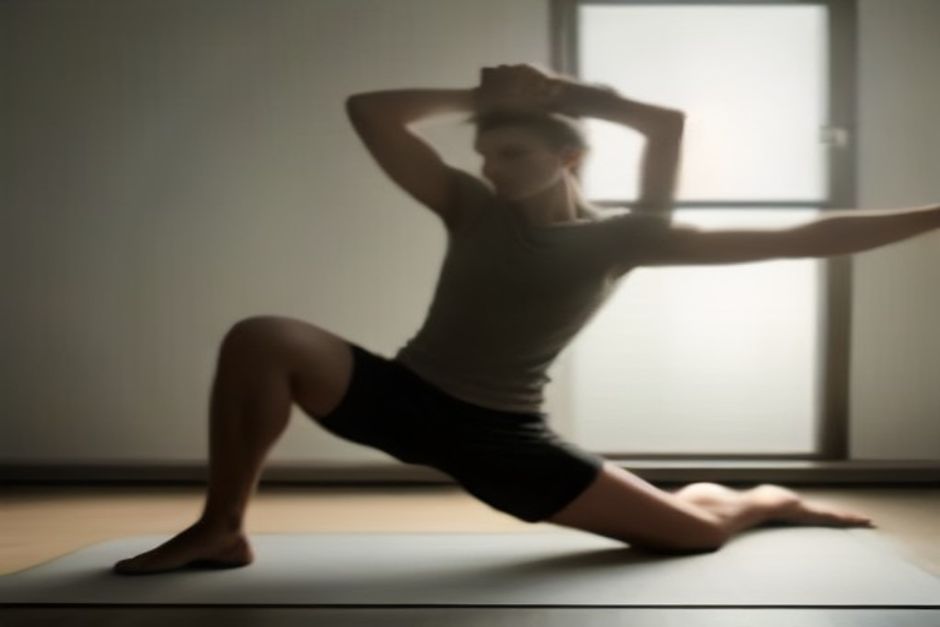
Walk past any yoga studio and count the men through the window. In most places you'll run out of count before you run out of fingers. The reasons are predictable — "I'm not flexible," "it's not a real workout," "I'd be the only guy" — and each one is wrong in an interesting way. Men tend to arrive at yoga later, stiffer, and more suspicious than the average beginner, which is exactly why a straight answer helps. Here it is.
The flexibility objection, retired
"I'm not flexible enough for yoga" is the one barrier that's fully self-refuting: flexibility is an output of practice, not an admission requirement. Saying you're too stiff for yoga is saying you're too dirty for soap. The honest version of the concern is different: "I'll look bad compared to everyone else." Also unfounded — in any beginner class, half the room is fighting their own hamstrings, and nobody has spare attention for yours. For the full argument, read the truth about flexibility; the short version is that tightness is common, trainable, and partly genetic, and none of that is a moral category.
Is it a real workout? Depends which door you walk through
"Yoga" covers everything from lying on bolsters for ninety minutes to flows that will leave a gym regular humbled by minute ten. A vinyasa or power class builds genuine strength — your own bodyweight held in chaturanga fifty times a class is not a soft option — plus a kind of stability and control that barbell training doesn't touch. The honest summary of what yoga does and doesn't build: excellent for core, shoulders, hips and single-leg strength; not a replacement for heavy pulling or maximal strength. Most men who train seriously end up treating yoga as the missing half of their program, not a rival to it.
What a man's body typically brings to the mat
Generalizations are dangerous, but some patterns are consistent enough that teachers plan around them:
- Tight hamstrings and hips. Often from years of running, cycling, lifting or sitting — take your pick. Forward folds will be humbling for a while. Bent knees are not a concession; they're correct technique. Low lunge and pigeon will become the most valuable poses you own.
- Relatively strong upper body, relatively weak stabilizers. Push-ups come easy; holding warrior III without wobbling does not. This is normal and reverses with practice.
- Shorter breathing habits. Chest-dominant, shallow. The breathwork side of class — ujjayi and slow nasal breathing — often delivers the first noticeable life benefit: better sleep, lower reactivity.
- A competitive reflex. The urge to match the person on the next mat. Yoga punishes this efficiently and impersonally, usually via a strained hamstring. Leave the scoreboard at the door; nobody is keeping one inside.
Which class to pick first
Skip the advanced flow and the candlelit yin for now. Look for:
- "Beginner," "foundations" or "hatha" on the schedule. Slower pace, alignment explained, no assumption that you know what a chaturanga is. Hatha classes hold poses longer and move deliberately — ideal when your body is unfamiliar terrain.
- A teacher who demonstrates modifications without being asked — that's the marker of someone who's taught stiff bodies before.
- Or skip the studio entirely for the first month. Online beginner programs remove the audience anxiety completely. The trade-offs are covered honestly in online vs studio; many men do best with a few weeks at home, then walk into a studio already knowing the basic shapes.
What actually happens in there
For the record, since nobody tells you: you rent or bring a mat, take your socks off, and follow along for 60–75 minutes. There may be Sanskrit pose names — you'll pick them up faster than you expect (the twenty words that matter cover most of it). Class usually ends lying on your back doing nothing, which feels absurd the first time and like the best part of your week by the fifth. Nobody will hug you, nobody will make you chant anything you don't want to, and if a class does something you're not comfortable with, lying on your mat and breathing is always an acceptable answer.
A two-week starter plan
Week one: three sessions of twenty minutes at home. Cat-cow, low lunge each side, a gentle forward fold with bent knees, child's pose, done. Week two: same three sessions plus one beginner class — in person or online. That's the whole plan. The goal for the first month isn't transformation; it's making the practice boring enough to be routine. Men are often good at this part — treating it like training rather than an event — and it's the correct instinct. Frequency beats intensity, as the minimum effective dose argument lays out.
The men who stick with yoga aren't the ones who were flexible. They're the ones who got curious about why they weren't.