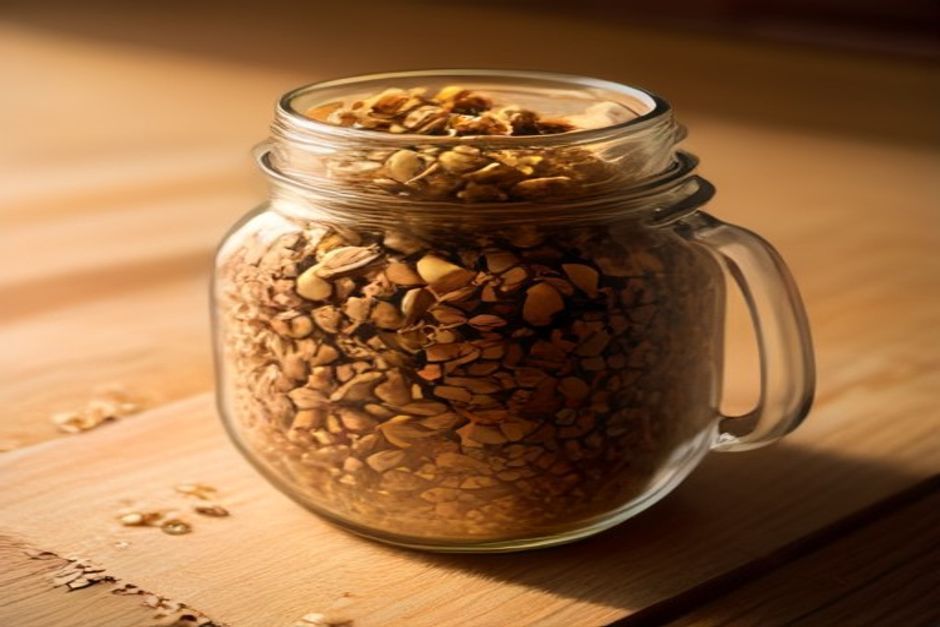
Read the label on a box of store granola sometime. The first ingredient is oats; the second, third, and fourth are usually three different kinds of sugar wearing different hats. A standard serving can carry as much sugar as a glazed donut, which would be fine if we ate it like a donut — occasionally, knowingly — instead of pouring it over yogurt every weekday and calling it health food. Homemade granola fixes this with almost no effort: one bowl, one pan, thirty minutes in the oven, and you control the sweetness. This version uses about half the sweetener of typical recipes and nobody has ever noticed.
The formula (worth memorizing)
Granola is a ratio, not a recipe: 3 cups dry base + ½ cup wet coating + salt. Everything else is preference. Here is the house version:
- 3 cups rolled oats — old-fashioned, not instant. Instant oats turn to dust; steel-cut stay bullets.
- 1½ cups nuts and seeds — any combination of chopped almonds, walnuts, pecans, pumpkin seeds, sunflower seeds. More nuts than feels reasonable is the correct amount; they are what makes this breakfast instead of candy.
- ½ cup olive oil — yes, olive oil. It crisps the oats beautifully and brings a faintly savory edge that lets you use less sweetener. Melted coconut oil works if you prefer a sweeter baseline.
- ⅓ cup maple syrup or honey — half of what most recipes call for. The granola will taste barely sweet in the oven and perfectly sweet once it meets fruit and yogurt.
- 1 teaspoon cinnamon, ½ teaspoon fine salt, 1 teaspoon vanilla. The salt is not optional — unsalted granola tastes like packing material.
- Optional after baking: ½ cup raisins, chopped dried apricots, or coconut flakes. Dried fruit always goes in after the oven, or it turns into gravel.
The method
1. Heat the oven to 150°C / 300°F. Line a rimmed baking sheet with parchment.
2. In a large bowl, whisk the oil, maple syrup, vanilla, cinnamon, and salt. Add the oats and nuts and stir until everything looks evenly damp. Take your time — dry pockets become pale, sad granola.
3. Spread on the sheet and press it down firmly with a spatula. This pressing is the secret to clusters: a compacted layer fuses as it bakes and breaks into shards afterward. If you like loose granola, skip the pressing and stir more often.
4. Bake 30 to 35 minutes, rotating the pan halfway. Do not stir if you want clusters. The granola is done when it is golden at the edges and smells toasty — it will still feel soft, and it crisps as it cools. Granola goes from golden to scorched in about four minutes, so the last stretch wants supervision.
5. Cool completely on the pan, untouched — at least 45 minutes. Then break into pieces, add dried fruit if using, and store in a jar. It keeps a month at room temperature, which is to say: it keeps until you finish it, which will be sooner.
When granola fits a practice life
A small bowl with yogurt and fruit is a solid post-practice breakfast — protein, slow carbohydrate, and enough fat to actually hold you until lunch. Pre-practice, keep the portion small or skip it; a full bowl of granola sits heavily in forward folds and twists, the same logistics problem we solve on the overnight oats page with the half-now, half-after strategy. The general timing rules live on the nutrition page.
Granola also converts well into other formats: pressed into a tin with extra honey it becomes bars; mixed with nut butter and rolled it becomes a lazier cousin of our energy balls. And a handful over a bowl of miso soup — no, we're joking. Save it for yogurt.
Variations that survive testing
- Tahini-honey: swap half the oil for tahini and use honey. Sesame-deep and less sweet, excellent with dates after baking.
- Cacao-coffee: add a tablespoon each of cocoa powder and finely ground coffee to the wet mix. The grown-up version, suspiciously good with cold milk.
- Cardamom-pistachio-apricot: swap cinnamon for cardamom, use pistachios, add chopped apricots after baking. The one that makes the kitchen smell like somewhere you want to be.
Bake it on Sunday while you meal-prep or stretch on the kitchen floor. By the time the pan is cool, the week's breakfasts are handled — which is one less decision standing between you and the morning mat.