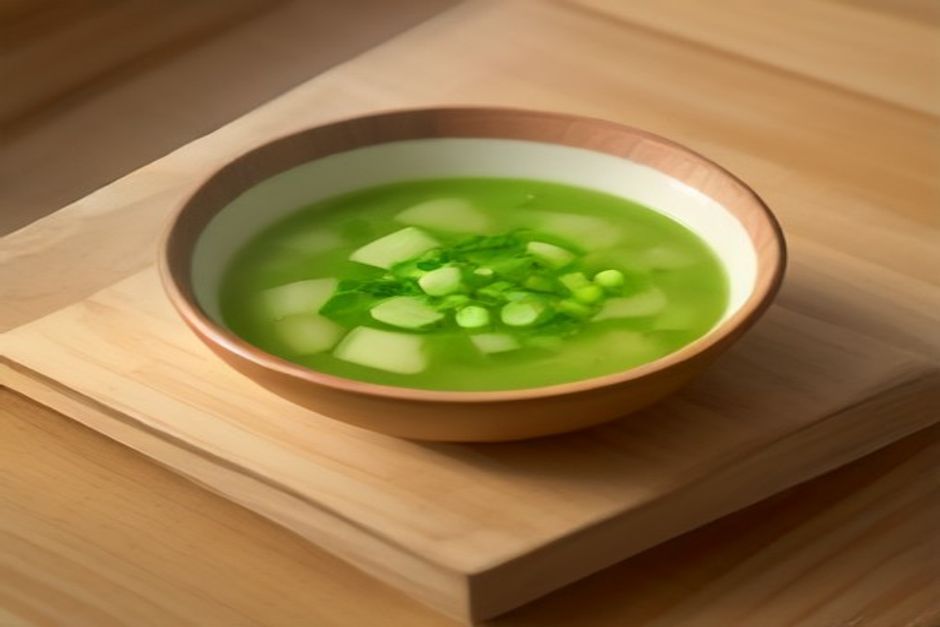
In Japan, miso soup at breakfast is as unremarkable as toast — part of a morning spread of rice, fish, and pickles that has fueled ordinary mornings for centuries. Somewhere on the way west, we decided breakfast had to be sweet: jam, cereal, muffins, granola marketed as health food with the sugar content of a candy bar. Then we wonder why 10 a.m. feels like wading through syrup. A bowl of warm miso soup is the simplest possible vote for the other option.
Why breakfast soup is not strange
Savory breakfasts are the global majority. Congee across East Asia, shakshuka in the Middle East, gallo pinto in Costa Rica — sweet breakfast is the exception, not the rule. Miso soup is the fastest member of that family: warm, salty, hydrating, and gentle on a stomach that just woke up. If you practice in the morning, it is also nearly ideal — enough to take the edge off hunger, light enough that you can be on the mat twenty minutes later without regretting it. For timing around practice, see the notes on morning yoga.
The five-minute version
For one generous bowl:
- 300 ml (about 1¼ cups) water
- 1 teaspoon instant dashi powder (or a small piece of kombu simmered 5 minutes — but then it is a ten-minute breakfast)
- 1 heaped tablespoon miso paste — white (shiro) miso is mild and slightly sweet; red is stronger
- A handful of silken or firm tofu, cut into small cubes
- A few dried wakame flakes (they rehydrate in the bowl)
- Optional: a handful of spinach or chopped bok choy, sliced scallions
Method: Bring the water and dashi to a gentle simmer. Add tofu and greens; simmer one minute. Turn off the heat. Put the miso in a ladle, lower it into the pot, and stir the paste into the broth through the ladle — or simply whisk it into a small bowl of hot broth first and return it to the pot. The one rule: do not boil the miso. Boiling flattens the flavor and roughs up the live cultures that make miso interesting. Add wakame and scallions at the end. Pour, eat, go.
The shortcut is legitimate
Purists make dashi from kombu and bonito flakes, and it is wonderful, and it is also a project. Instant dashi powder is the standard weeknight tool in Japanese home kitchens. Keep a jar of miso in the fridge — it keeps for months — a bag of wakame in the cupboard, and tofu as a weekly buy, and this breakfast is always five minutes away.
What it gives you, honestly
No superfood claims. Here is what a bowl actually delivers: about 100–150 calories with tofu, roughly 8–10 grams of protein, real hydration after eight hours without water, and warmth — which is underrated as a morning strategy. The protein and savory depth mean you are not chasing a glucose spike with a crash an hour later, which is the quiet failure mode of the pastry-and-juice breakfast.
Miso is a fermented food, and fermented foods are a reasonable thing to include in a varied diet — but treat it as food, not as a probiotic prescription. One honest caveat: miso is salty. A bowl runs roughly 600–900 mg of sodium depending on the paste, so if you are watching blood pressure, use a lighter hand with the miso and a heavier hand with the tofu and greens.
Variations
The heartier one: add a soft-cooked egg, or yesterday's rice, and it becomes a full meal. The greener one: double the greens and add grated ginger. The one for people who hate mornings: make the broth the night before, refrigerate, and reheat with miso stirred in fresh — three minutes, half-asleep compatible. If miso is not your thing, the same slot in the day is served by warming congee or a savory bowl from our Ayurvedic breakfast ideas.
Breakfast does not need to be exciting. It needs to be warm, real, and done in less time than it takes to check your phone.
Before practice
If you roll out a mat first thing, miso soup threads the needle between practicing hungry — which for many people means dizzy in the first downward dog — and practicing full, which means regretting the first twist. A small bowl twenty to thirty minutes before practice sits well for most people. Everyone's digestion has its own opinions; test it on a quiet morning, not before a class you care about. For the full picture of eating around practice, see yoga and nutrition, and for the classic all-hours version of this soup, our basic miso soup goes deeper on ingredients.