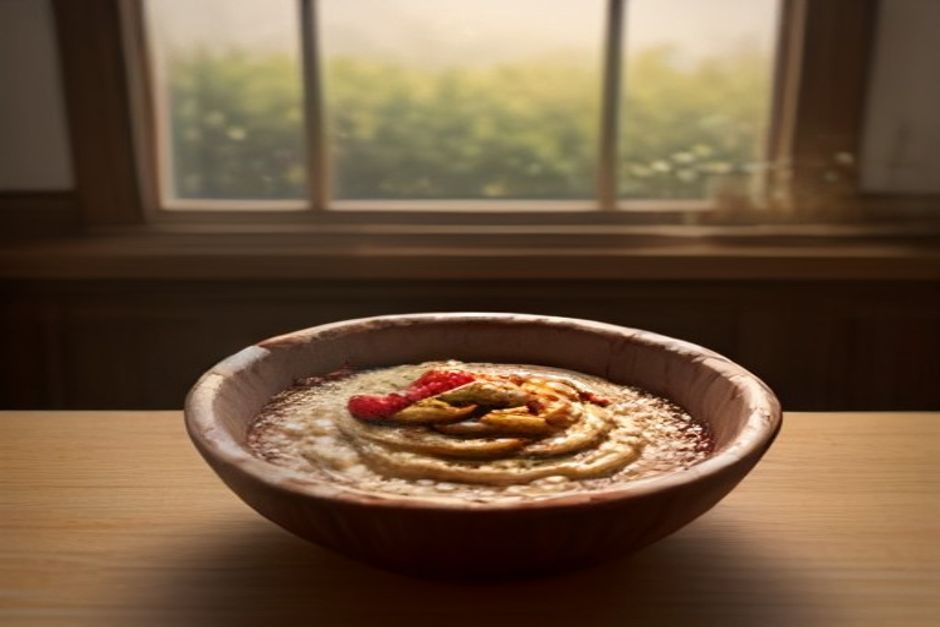
There is no such thing as a yoga diet, despite what the internet sells you. But there is such a thing as breakfast that respects the rest of your day: something warm, slow-burning, and quiet enough that you can practice an hour later without regret. This bowl is that breakfast. It is oatmeal taken seriously — not the paper packet with dust pretending to be apple, but actual oats with seeds, fruit, and fat, assembled in about ten minutes.
The logic is simple. Oats bring slow carbohydrates and beta-glucan fiber, which keeps blood sugar on an even keel instead of the spike-and-slump rollercoaster. Seeds and nut butter add fat and protein, which is what "staying full until lunch" is actually made of. Fruit handles the sweetness so the sugar jar can stay in the cupboard. The result is steady energy — the edible version of a long exhale.
The formula
Think of the bowl as four layers. Once you know the structure, you will never need the recipe again:
- Base: half a cup of rolled oats cooked with water or milk, plus a pinch of salt. The salt is not optional — it is the difference between porridge and paste.
- Seeds: a tablespoon each of ground flax and chia or hemp seeds. Ground flax, because whole flax seeds are scenic but pass through unchanged, taking their omega-3s with them.
- Fruit: whatever is in season or in the freezer. Berries, a grated apple, half a banana, a handful of chopped dates.
- Fat: a real spoonful of nut butter — almond, peanut, tahini — stirred in at the end so it ribbons through the heat.
The recipe
Ingredients (one bowl):
- ½ cup rolled oats
- 1 cup water or milk of choice
- 1 pinch of salt
- 1 tablespoon ground flaxseed
- 1 tablespoon chia or hemp seeds
- 1 small apple, grated, or a handful of berries
- 1 tablespoon almond or peanut butter
- Optional: cinnamon, a few chopped walnuts, a drizzle of honey if the fruit is tart
Method: Bring the liquid and salt to a simmer, stir in the oats, and cook on low for five to seven minutes, stirring when you remember to. Take it off the heat, stir in the flax and chia, and let it sit for two minutes — the chia will thicken everything into something resembling intention. Top with fruit, nut butter, cinnamon, and walnuts. Eat slowly. That is the whole recipe.
Timing around practice
If you practice in the morning, the honest rule is: practice first, bowl after, with at least a cup of water before you roll out the mat. A full stomach and forward folds are not friends. If you are the rare person who can eat and immediately move, keep the portion small and skip the nut butter. More on that balance on our morning practice page and in the notes on what to eat after yoga.
Variations worth knowing
- Summer version: skip the stove entirely. Soak the oats overnight in milk with the seeds — our overnight oats page covers the ratios — and add the fruit cold in the morning.
- Savory version: cook the oats in water, skip the fruit and cinnamon, and top with olive oil, a soft egg, wilted greens, and flaky salt. It sounds wrong and tastes like a good decision.
- Ayurvedic-leaning version: stew the apple with the oats, add ginger and cardamom, and see our Ayurvedic breakfast notes for the warming-spice approach.
The honest caveats
Oatmeal is not magic. It will not detox anything, align anything, or substitute for enough sleep. It is simply a reliable, inexpensive breakfast with a good fiber-to-effort ratio, and reliability is underrated. Also: if you sweeten it with half a cup of maple syrup, you have made dessert, which is fine — just call it what it is.
Make it automatic
The bowl's real strength is how little it asks of you. Keep a jar on the counter with the oats, flax, chia, and cinnamon already mixed; in the morning you scoop, add liquid, and apply heat. Deciding nothing before coffee is a small but genuine luxury, and it is the difference between a breakfast you eat most days and a recipe you admired once. A double batch reheats well with a splash of milk, and the seeds do not mind waiting overnight in the fridge either.
One bowl, ten minutes, and a morning that does not collapse at ten thirty. For more of the same philosophy, the nutrition page lays out how we think about food and practice together.