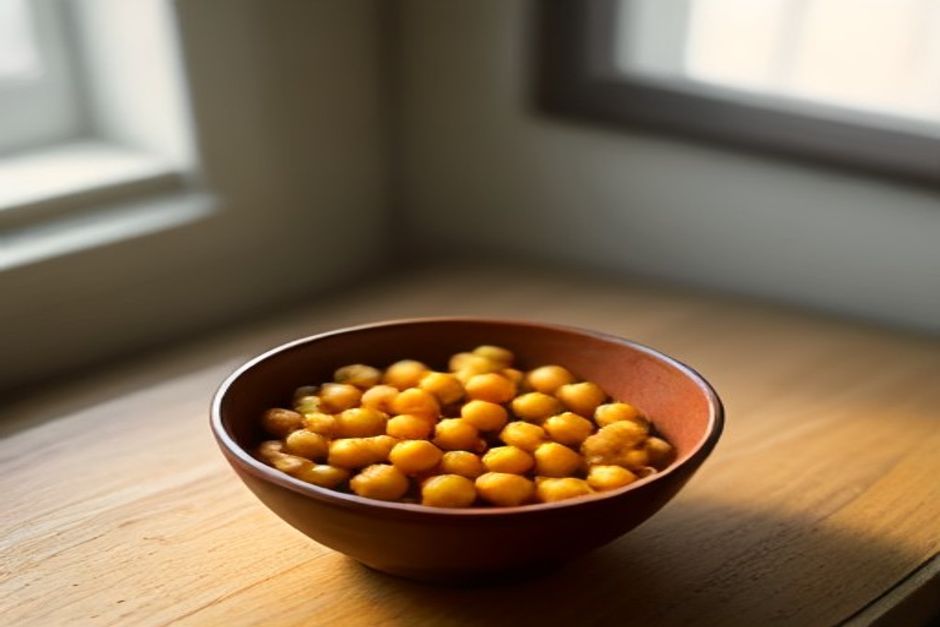
Every household has the same snack problem: the hour between practice and dinner, or between lunch and the next meeting, when you want something crunchy and the cupboard offers either crackers or regret. Roasted chickpeas solve it. A can of chickpeas costs about a dollar, turns into a genuinely crunchy, protein-rich snack in under an hour, and sits happily in a jar on the counter for days. They work as a light bite after practice — substantial enough to hold you, not so heavy that you feel it in your next forward fold — which is more than can be said for most things that come out of a bag.
The one rule: dry them properly
Nine out of ten disappointing batches of roasted chickpeas fail for one reason: the chickpeas went into the oven wet. Water is the enemy of crunch. Canned chickpeas arrive sitting in liquid (aquafaba, useful elsewhere — save it if you bake), and if you simply drain and roast, the outsides steam instead of crisping. Drain them, rinse them, then spread them on a clean kitchen towel, roll them gently dry, and give them ten minutes of air-drying if you have the patience. Some skins will loosen and come off; leave them. You do not need to peel each chickpea, whatever the internet told you. Dry-ish is good enough; dripping is not.
Base recipe (one can, two servings)
- 1 can (400 g) chickpeas, drained, rinsed, and thoroughly dried
- 1 tablespoon olive oil — no more; excess oil softens them as they cool
- ½ teaspoon fine salt
- Your spice mix of choice (below), added after roasting
Method
Heat the oven to 200°C (400°F). Toss the dried chickpeas with the oil and salt on a rimmed baking sheet and spread them in a single layer with breathing room — crowding is the second enemy of crunch. Roast for 30 to 40 minutes, shaking the pan once halfway, until deeply golden and rattling when you shake the tray. Then — and this is the step most recipes skip — turn the oven off, crack the door, and leave the chickpeas inside for 15 more minutes. They finish drying in the residual heat and come out properly crisp rather than crisp-outside, chewy-inside. Toss with spices while still warm.
Three spice mixes
- Smoky paprika: 1 teaspoon smoked paprika, ½ teaspoon ground cumin, a pinch of cayenne. The crowd-pleaser. Tastes like it came from a tapas bar.
- Curried: 1 teaspoon mild curry powder, ½ teaspoon turmeric, a pinch of black pepper. Warm, earthy, and good alongside a bowl of chickpea-spinach curry if you are in a legume mood.
- Rosemary and lemon: 1 teaspoon finely chopped fresh rosemary, the zest of half a lemon, a few grinds of pepper. Add the zest only after roasting — it burns. The quietest of the three, and the one that disappears fastest.
Make all three in one session by dividing the roasted batch across three bowls before spicing. That is the whole batch-cook trick: one oven run, a week of variety.
Storage, and an honest word about crunch
Roasted chickpeas are at their best the day they are made — hot, loud, dangerously easy to finish. Stored in a loosely covered jar at room temperature (not airtight, which traps residual moisture and softens them), they stay pleasantly crunchy for two to three days and edible for about five. If they soften, ten minutes back in a 180°C oven revives them. Do not refrigerate them; the humidity undoes all your drying work in an afternoon.
Where they fit
A small handful is a reasonable post-practice snack: some protein, some carbohydrate, nothing that sits like a stone. They also travel well — a jar in a work bag beats the vending machine by every measure — and they turn a simple soup into dinner when scattered on top instead of croutons. If your snack rotation needs another pillar, homemade granola covers the sweet direction; this one covers savory. For the bigger picture of eating around practice, the nutrition page lays out the site's whole approach: real food, no miracle claims, nothing you cannot buy at a normal supermarket.