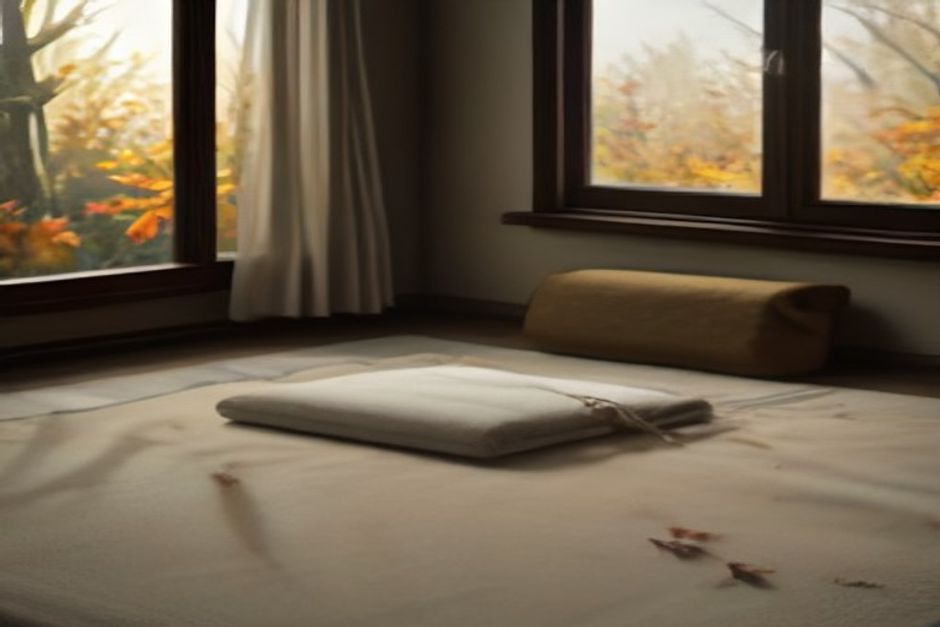
Autumn doesn't arrive like winter, with a clear verdict. It arrives as a series of small thefts: ten minutes of light, then twenty, a morning that suddenly wants a jumper, an evening that ends before you noticed it started. Energy that was abundant in August turns patchy by October. You can respond by gripping the summer routine tighter — same pace, same flows, same bedtime — or you can do what the season is doing: descend, slow down, get closer to the ground. This is a practice for the second option. It's not a surrender. It's a matching.
What the season actually asks
In the Ayurvedic tradition, autumn is vata season — dry, cold, mobile, erratic — and the remedy is its opposite: warm, stable, rhythmic, grounded. You don't need to buy the whole framework to notice the pattern. Shorter days genuinely shift sleep hormones; colder muscles genuinely need longer to warm; a mind that spent summer outward-facing genuinely starts turning in. Fighting all of this with an unchanged routine costs more energy than adapting to it. The broader seasonal thinking is in our autumn practice journal and the autumn yoga guide; this page is a specific routine for the weeks when the light goes.
The mat practice: slower flows, longer exhales
Twenty to thirty minutes, in the hour before the light fails if you can manage it. The rules: every movement at seventy percent speed, every exhale a count or two longer than the inhale, and more time on the ground than in the air.
Grounded warm-up
How: Start lying down. Knee rocks, then slow Cat-Cow for eight rounds, then Child's Pose for a full minute with the forehead resting on the mat or a folded jumper.
Why: Starting on the floor sets the register for the whole practice. Autumn practice is not about generating heat fast; it's about arriving fully before asking for anything.
Standing balances: Tree — Vrksasana
How: Two or three slow rounds of Tree Pose per side, hand on the wall allowed, gaze on one unmoving point. Then a slow standing forward fold with soft knees, letting the head hang for five breaths.
Why: Balance poses are attention anchors — you cannot mentally rehearse tomorrow while standing on one leg. And the season's namesake is a tree doing exactly this: roots down, letting go of what's finished.
The grounding finish
How: A seated forward bend for two minutes, a reclined twist each side, then Savasana under a blanket — not optional; the room is cooler than it was in July. Five minutes minimum.
Why: Forward folds and long Savasanas are the physical form of the exhale bias. The practice should end noticeably calmer than it began; in autumn, that's the entire point.
The breath, lengthened
If you change only one thing this season, change the exhale. A simple practice after the poses: breathe in for four counts, out for six or eight, for three to five minutes. No retention, no strain — the ujjayi page has the basic technique if you want a soft ocean sound to pace yourself. Autumn's scattered, windy quality settles fastest through the breath, and this takes less time than scrolling the weather app and mourning the forecast.
Off the mat: routines that match shorter days
The season's real practice happens at the edges of the day:
- Catch the morning light. With sunrise sliding later, ten minutes outside before screens is the cheapest circadian support available. Our morning routine page builds around exactly this.
- Let bedtime drift earlier. You are not failing autumn by being sleepy at nine. Follow it for a week and see what happens to the mornings; the sleep page covers the mechanics.
- Warm the inside. Cooked over raw, soups over salads — a bowl of kitchari or winter soup is seasonal practice too, just edible.
- Shorter, more frequent practice. Four twenty-minute sessions beat one heroic ninety when energy is patchy.
The trees are not giving up when they drop their leaves. They are concentrating.
Practice like this for a few weeks and the season stops feeling like a loss of light and starts feeling like a gain of evening. And when the dark properly settles in, the winter evening practice is waiting where this one leaves off.