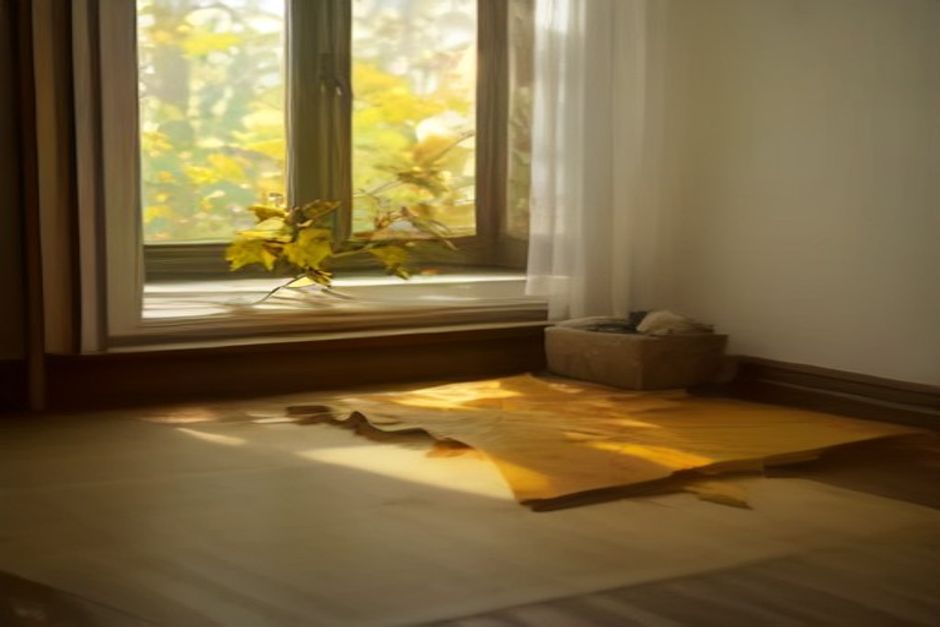
Every season asks something different of a yoga practice, but autumn asks the most abruptly. Summer ends and within a few weeks the mornings are cold, the floor is cold, the light disappears before dinner, and the schedule fills up again. The practice that felt effortless in July now competes with dark commutes and the first cold of the season. The common mistake is trying to keep practicing like it's still August. Autumn works better when you let it change the shape of things.
What actually changes in the body
Two honest observations before any folklore. First: cold tissue is stiffer tissue. Muscles and connective tissue at lower temperatures genuinely resist stretch more, which is one reason a cold morning fold feels two inches shorter than an evening one. Second: most people move less overall as daylight shrinks — more sitting, more driving, less incidental walking. Stiffer hips and a tighter low back by October aren't a mystery; they're arithmetic.
Traditional systems noticed the season too — Ayurveda associates autumn with vata, the dry, cold, mobile quality, and prescribes warmth, oil, routine, and grounding. You don't need the doctrine to use the advice: warmer room, slower start, steadier rhythm. Our autumn practice notes cover the seasonal sequence side; this page is about the bigger shift in how you approach the months.
Grounding beats intensity
Summer rewards expansion — big backbends, ambitious balances, practice outdoors. Autumn rewards the opposite direction: down and in. In practice that means:
- Longer warm-ups. Give the first ten minutes to cat-cow, gentle lunges, and slow sun salutations before asking for depth. In cold months the warm-up isn't the appetizer; it's half the meal.
- Standing poses held longer. Warrior II, triangle, goddess — stable, feet-rooted shapes that generate heat without depleting you. Autumn grounding is a felt thing: pressure through the feet, weight dropping, attention low in the body.
- More floor time. End with the hips — butterfly, pigeon with props, a reclined twist. Shorter days tend to wind people up; the floor is where you unwind the winding.
- Forward folds over backbends. Not a rule — a ratio. Keep the backbends gentle and let folds carry the closing mood of the practice.
Breath for cold mornings
This is the season where breathwork earns its keep. A few minutes of ujjayi at the start of practice warms the throat and gives the nervous system a steady rhythm to organize around. If you run cold and scattered, alternate nostril breathing before bed pairs well with darker evenings — slow, even, boring in the best way. Skip the aggressive heating breaths on an empty stomach first thing; autumn mornings are not the time to discover what bhastrika does to a fasted body.
Letting go of summer goals
Here's the less mechanical part. Many people arrive in autumn dragging goals set in June — the handstand progress, the five-day weeks, the deep backbend that was "so close." The season has its own opinion. Energy that was abundant in July is now allocated to darker mornings, work, school runs, and the immune system's annual negotiations.
You can fight this and call it discipline, or you can read it as the oldest lesson in the philosophy stack: aparigraha, non-grasping — loosening the grip on what was working three months ago so something appropriate can happen now. Our aparigraha entry makes the fuller case, but the seasonal version is simple: a maintained practice beats an abandoned ambitious one. Twenty grounded minutes, four days a week, carried through the winter, is worth more than the heroic plan that collapses by November.
Autumn is the year teaching impermanence with leaves. The practice is learning to take the hint.
Practical notes for the cold months
- Warm the room, not just yourself. Practicing on a cold floor in a cold room is miserable and subtly tightening. Ten minutes of heat beforehand changes the whole session.
- Layers for the start and end. Socks and a sweater for warm-up and savasana; you'll shed and regain them. Cold savasana is just lying on the floor being cold.
- Anchor the time. As light shifts, willpower-based scheduling fails. Tie practice to a fixed event — after the morning coffee, before dinner — and let the habit carry what motivation won't.
- Keep one thing constant. If everything else shrinks, keep a single daily element: five breaths, one ten-minute practice, three sun salutations. Continuity matters more than volume.
Autumn doesn't need a better practice from you. It needs a warmer, slower, slightly humbler one. Give it that, and the season stops being an interruption and becomes what it actually is: the part of the year that teaches you how to land.