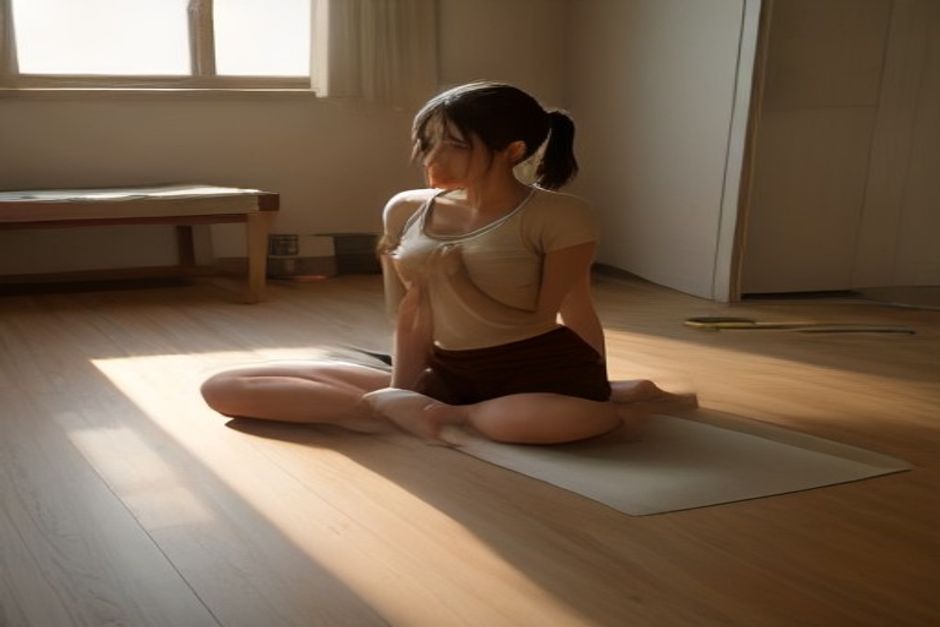
Every piece of yoga advice quietly assumes you have an hour, a quiet room, and a body that slept through the night. Parents of young children have none of these, and most respond by abandoning practice entirely — saving it for some future season when life calms down. That season is famously late. The better move is to shrink the practice until it fits the life you actually have, because the dirty secret of yoga is that five honest minutes, most days, do more than a heroic ninety minutes twice a month.
First, drop the perfect-session fantasy
The biggest obstacle is not time; it is the mental image of what a session is supposed to look like. Candles, silence, a full sequence, a long savasana. Measured against that image, everything available to a parent looks like failure, so nothing happens at all.
Redefine the win. A practice is: you got on the floor and moved with your breath for a few minutes. That is it. Three poses count. Being interrupted counts. Practicing in pajamas next to a pile of laundry counts — arguably it counts double, because you did it inside real life instead of waiting for an escape from it. The ten-minute practice piece makes the same case in detail: frequency beats duration, every time, for everything that matters about a home practice.
The five-minute toolkit
Keep one tiny sequence in your pocket — no decisions required, because decisions are what exhausted brains refuse to make. This one covers a full spine and both hips:
- Cat-cow, one minute. On hands and knees, moving with the breath. It unfurls a back that has been carrying, rocking, and hunching over small humans all day.
- Child's pose, one minute. Forehead down, breathing into the low back. This is also where you land when the practice gets interrupted — more on that below.
- Low lunge, one minute per side. The antidote to hours of sitting on floors and perching on tiny chairs. Pad the back knee with whatever is nearby; a folded baby blanket is exactly the right tool.
- Legs up the wall, two minutes. The closest thing parenting offers to a reset button. Back on the floor, legs vertical, arms out. If you only ever do one pose, make it this one, and do it at the end of the day.
Five minutes, four poses, zero equipment. On good days, run it twice. On the other days, one round done grumpily still counts — the nervous system does not grade your mood.
Practicing through interruptions
Here is the reframe that makes parent-yoga sustainable: the interruption is not the opposite of the practice. A toddler climbing onto your back during child's pose is a weight-bearing variation. A baby who wakes up at minute three is a timer with opinions. You are not failing to do yoga because of your children; you are doing a specific, ancient, difficult form of it — staying steady while the world tugs at you — that monks once needed a cave to avoid and you get for free, hourly.
Practical tactics: pause in child's pose when summoned, deal with the crisis, return to the mat if it takes under two minutes, and count the session as done if it takes longer. Lower the bar until it cannot be tripped over, then step over it daily. And when the kids are old enough to notice, let them join — downward dog with a four-year-old is chaos, but it is shared chaos, and yoga with kids has its own logic and its own rewards.
Timing strategies that actually work
Before the house wakes. The highest-quality minutes of the day, if you can tolerate the alarm. Even ten minutes of the morning variety — a few sun salutations, one lunge, one breath of silence with coffee — sets a floor under the whole day.
The contact-practice. Baby only naps on you? That is a forty-minute seated meditation you did not plan. Slow breathing with a sleeping child on your chest is legitimately practice — some traditions would call the child a very warm, very heavy meditation bell.
After bedtime. The most reliable slot. Keep it short and horizontal: the before-bed routine was designed for exactly this state of depletion, and it ends in the direction you want to be going anyway.
The honest math of this season
You will not become more flexible this year. You might not even hold your current range. What five daily minutes actually buys is different and arguably more valuable: a back that survives the carrying years, a nervous system with one reliable off-ramp from overwhelm, and a thread of continuity — a practice that is still yours, still there, on the other side of these years. Parents who keep a tiny practice through the small-child era return to longer practice later as if they never left; parents who quit entirely often do not come back.
One more permission slip, since no one else will issue it: if tonight the whole practice is three breaths standing at the kitchen sink after everyone's asleep, that was the practice. The mat will still be there tomorrow. So will the pile of laundry — some things are eternal, and yoga, fortunately, is patient.